Plywood Cabinets, Cabinet Boxes & Structural Cabinetry
engineered panel -- mid tier
- The structural backbone of custom cabinetry -- strong, stable, and screw-holding
- Better moisture tolerance than MDF or particleboard
- Veneer face options allow natural wood grain on a stable engineered core
STEP · STL · IGES · DWG · DXF · PDF · and more
Uploads are secure & confidential
Is Plywood Good for Cabinets?
Yes — plywood is the professional standard for cabinet boxes and structural cabinetry. It outperforms MDF and particleboard in screw-holding, moisture tolerance, and long-term structural stability. Plywood is the industry standard for cabinet boxes and structural cabinetry due to its strength, screw-holding ability, and long-term durability.
For cabinet-grade plywood, hardwood faces — typically birch, maple, or oak — are used for cabinet sides, shelves, drawer boxes, and backs. The veneer face can be visible (stained or clear-coated) or concealed behind doors and edge banding. The cross-laminated core provides structural integrity that MDF and particleboard simply cannot match.
Best uses: kitchen cabinet carcasses, shelving systems, built-ins, and utility cabinetry. Not ideal for ultra-smooth painted faces, decorative routed profiles, or low-cost imported cabinet construction.
How OpenSpindle works
We tap our partner network. You get the best-match quote.
Upload your part and we tap our network of partner shops to get you a competitive, all-in quote that is the best match for the job.
One upload
A CAD file or a sketch. That is the whole ask on your end.
Your best-match quote
Sourced from the partner shops set up for your exact part.
All-in, on your timeline
Machining, finishing, and shipping detailed to your turnaround.
Plywood Cabinets, Shelving & Structural Applications
Plywood is the structural foundation of custom cabinetry and built-in shelving. It performs in applications where MDF and particleboard fail under load or near moisture.
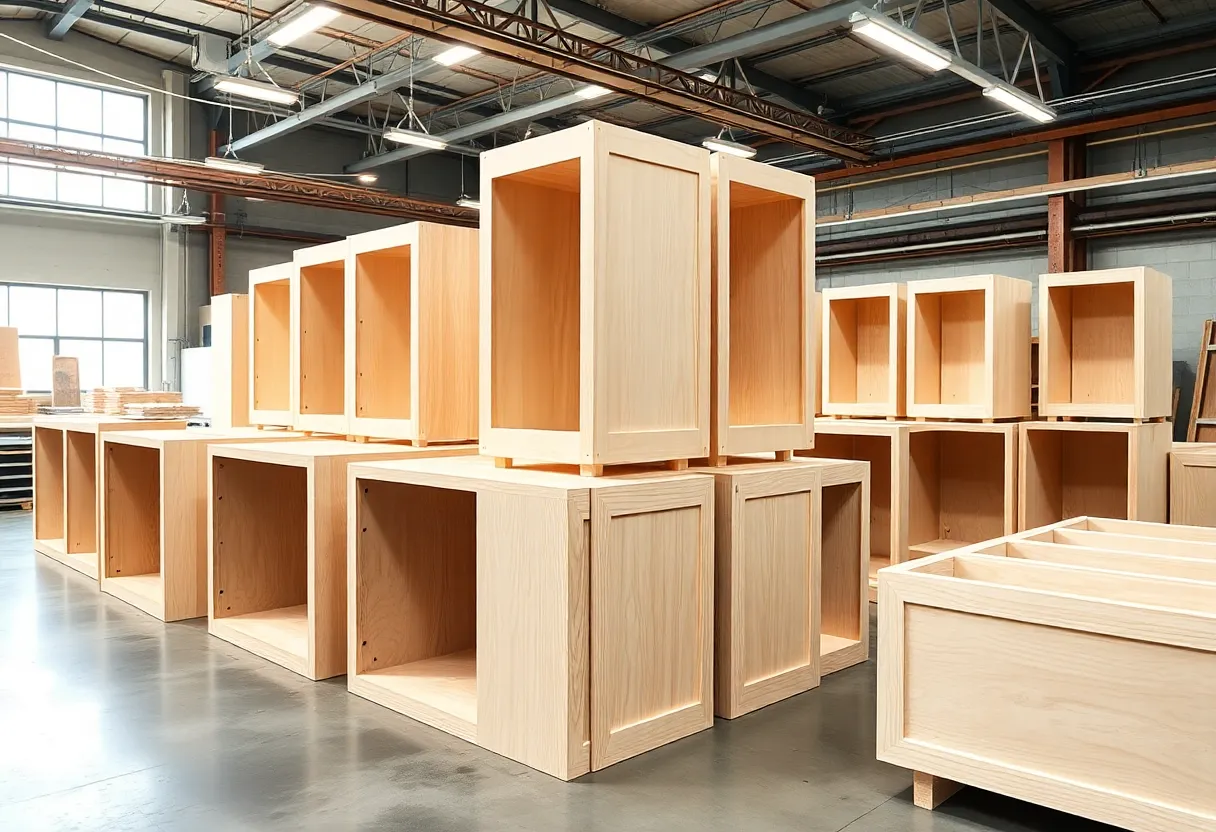
Cabinet-grade plywood is the standard material for kitchen cabinet boxes and carcasses. Its screw-holding, strength, and stability under load are superior to MDF or particleboard for all structural cabinet applications.
- Base, wall, and tall cabinet carcasses
- Frameless and face-frame construction
- Structural drawer pedestals and rollout systems
3/4 inch hardwood plywood is the industry standard for kitchen cabinet boxes
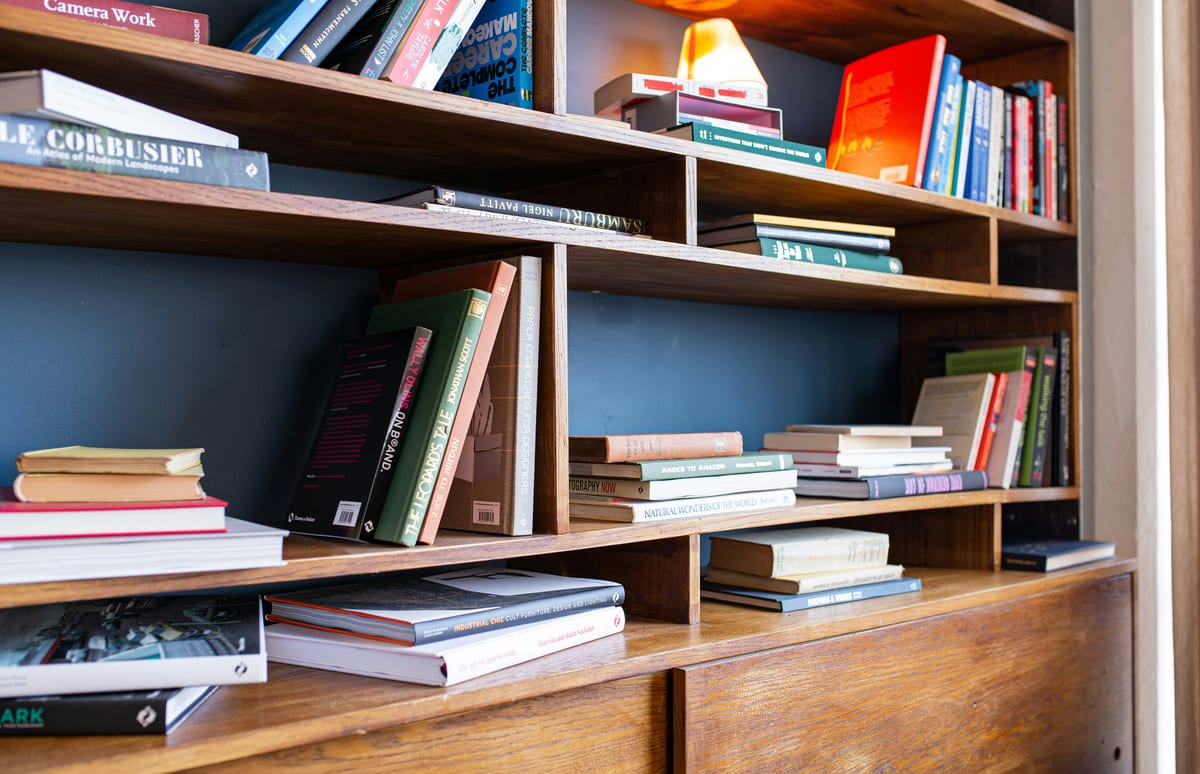
Plywood built-in shelving outperforms MDF and particleboard in load-bearing and long-span applications. For shelves holding books, equipment, or heavy storage, plywood is the only structural choice.
- Heavy-load fixed shelving for books and equipment
- Adjustable shelf systems with plywood shelf stock
- Garage and utility storage rated for real loads
For spans over 32 inches, 3/4 inch plywood with a solid wood front nosing prevents sag

Plywood's structural properties make it ideal for built-ins that handle real loads — entertainment systems, office cabinetry, wardrobes, and desks where structural integrity is as important as appearance.
- Entertainment system and media cabinetry
- Home office built-ins with integrated desk
- Wardrobe and storage case construction
Hardwood veneer plywood can be left with natural finish for a contemporary look
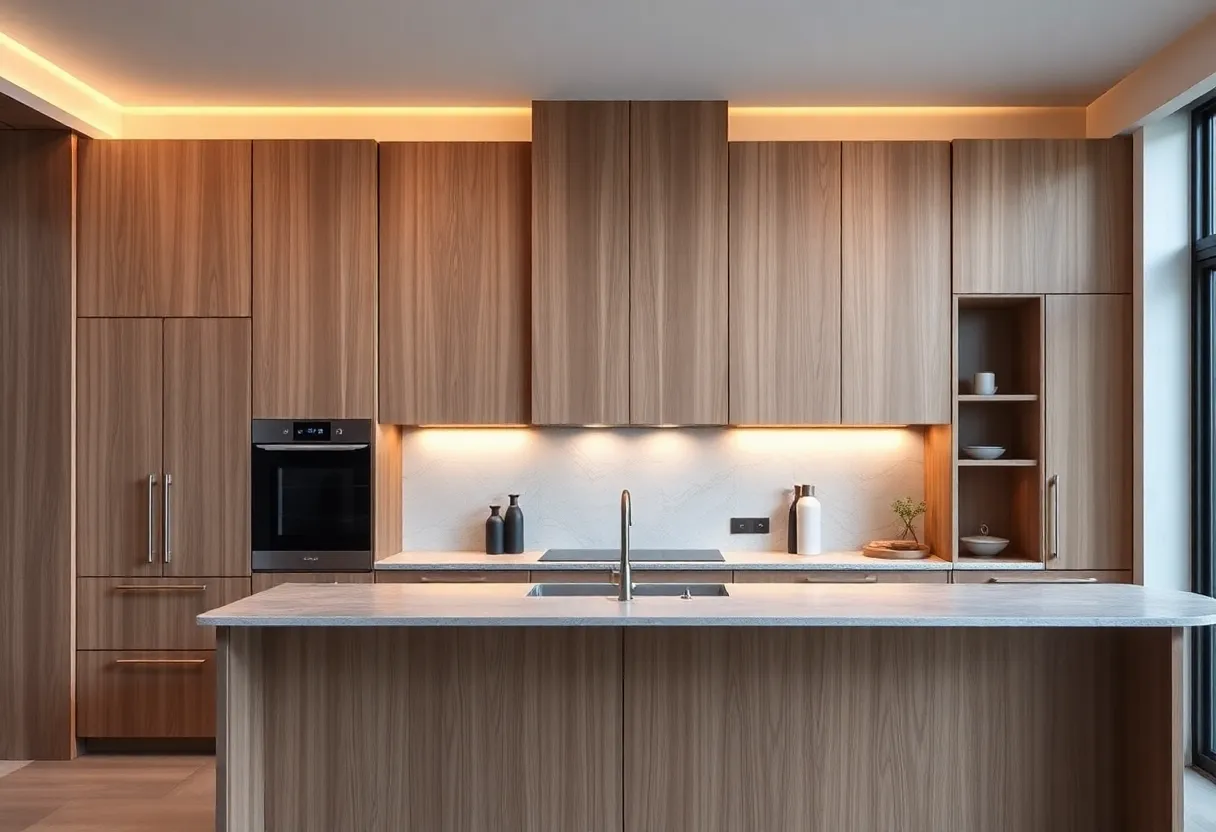
Hardwood veneer plywood finished naturally — oiled, stained, or clear-coated — is the defining material of Scandinavian and contemporary cabinetry where exposed plywood edge detail is a design feature.
- Visible plywood sides and shelves in natural birch or oak
- Contemporary cabinets with exposed plywood edge detail
- Modern shelving with plywood grain as a design feature
Baltic birch is the premier choice for natural-finish plywood applications
How Plywood Cabinets and Cabinet Boxes Are Constructed
Plywood is primarily used for structural box construction. Door faces, drawer fronts, and visible elements are often solid wood or MDF.
All-Plywood Construction
All structural and visible components -- carcasses, shelves, door faces, drawer fronts -- built from hardwood veneer plywood. Popular in contemporary cabinetry where the plywood aesthetic (visible grain, raw edges, or exposed edge laminations) is part of the design.
Best For
- Contemporary and Scandinavian-style cabinetry
- Natural-finish modern furniture
- Workshop and utility cabinetry
Plywood Cabinet Pros and Cons
Plywood is the right choice for structural applications. Its benefits over MDF and particleboard are most apparent under load and near moisture.
Ideal For
- ✓Cabinet carcasses and structural box construction
- ✓Shelving and storage applications with real load requirements
- ✓Environments with any possibility of incidental moisture exposure
- ✓Natural-finish contemporary cabinetry where the plywood aesthetic is intended
- ✓Furniture requiring strong screw connections at edges
May Not Be Ideal For
- –High-gloss painted applications -- plywood grain can telegraph through paint
- –Complex CNC profiles -- veneer tearout is a risk without proper technique
- –Particleboard-level budget requirements -- plywood costs more
- –Fully submerged or continuous water exposure (marine plywood excepted)
- –Applications requiring a perfectly flat surface -- plywood can cup or bow slightly
Plywood vs Particle Board Cabinets — and Other Panel Materials
Plywood is the structural benchmark for cabinet construction. Understanding how it compares to particleboard, MDF, and Baltic birch helps in selecting the right material for each component.
Plywood vs MDF
- MDF produces a smoother painted surface -- no veneer grain telegraphing
- Plywood is significantly stronger and holds screws at edges
- Plywood handles moisture far better than MDF
- MDF is typically 20-30% less expensive per sheet
Use MDF for flat painted faces requiring smooth finish; use plywood for structural components and moisture-exposed applications.
View MDF →Plywood vs Baltic Birch Plywood
- Baltic birch has a void-free core -- standard plywood may have voids that affect CNC work
- Baltic birch faces are more consistent and CNC-friendly
- Standard plywood is more widely available and less expensive
- Both are structurally excellent -- Baltic birch is the premium choice for visible natural-finish work
Use standard plywood for structural carcasses; use Baltic birch for CNC work, natural-finish applications, and drawer boxes.
View Baltic Birch Plywood →Plywood vs Melamine
- Melamine is pre-surfaced -- no finishing required for interior cabinet applications
- Plywood's structural strength and screw-holding are superior
- Melamine is more moisture-resistant on its faces but not at exposed edges
- Melamine is typically less expensive than hardwood plywood
Use melamine for simple casework interiors and shelf liners; use plywood where structural performance, edge fastening, or visible natural finish is needed.
View Melamine →Plywood vs Particleboard
- Particleboard cabinet carcasses have a structural lifespan of 10-15 years vs. 30-50+ for plywood
- Plywood holds screws at edges and faces; particleboard screws strip out under repeated stress
- Particleboard swells and fails rapidly when exposed to moisture; plywood tolerates incidental exposure
- Most imported semi-custom cabinets use particleboard — upgrading to plywood is the single highest-value structural improvement available
For long-term cabinet durability, plywood carcasses are significantly superior. Particleboard is acceptable only for budget applications where longevity and moisture tolerance are not priorities.
How Much Do Plywood Cabinets and Cabinet Boxes Cost?
Cabinet-grade plywood is considered the professional standard for structural cabinet construction due to its durability and long-term performance. It is a mid-tier panel material — more expensive than MDF and particleboard, less expensive than solid hardwood — and the cost premium is justified by structural longevity.
Cost Impact by Construction Method
Material Cost
Hardwood plywood runs $55-120 per 4x8 sheet depending on species face (birch, maple, oak, walnut) and grade. Domestic birch is least expensive; hardwood-faced grades cost more.
Includes
- Birch plywood (most common)
- Hardwood-faced plywood (oak, maple)
- Marine and exterior-rated grades at premium
Best For
Plywood Kitchen
A full kitchen built with plywood carcasses and hardwood or MDF fronts typically runs $15,000-28,000 installed, depending on the front face material and finish.
Includes
- Plywood carcasses throughout
- Solid wood or MDF door fronts
- Standard hardware
Best For
Contemporary Plywood Aesthetic
All-plywood contemporary cabinetry with natural Baltic birch or hardwood veneer finish runs $18,000-35,000 for a kitchen -- the plywood itself is the visible design element.
Includes
- Baltic birch or hardwood veneer plywood throughout
- Clear or natural finish
- Contemporary hardware
Best For
What Actually Drives Plywood Cost
- ·Plywood face species -- birch vs. maple vs. oak vs. walnut
- ·Grade -- A-grade faces cost more than B-grade
- ·Thickness -- 3/4 inch is standard; 1/2 and 1/4 inch for backs and bottoms
- ·Front face material chosen separately from plywood carcass
Key Insight
Upgrading from particleboard (the default in imported semi-custom cabinets) to plywood for cabinet carcasses is one of the highest-value upgrades available in custom cabinetry. The structural difference is dramatic and the cost difference is modest relative to total project cost.
Finishes & Design Guidance
Plywood is most commonly used for cabinet boxes and shelving systems, though hardwood veneer plywood is increasingly used as a visible design material in Scandinavian and contemporary cabinetry. Its aesthetic ranges from purely utilitarian (hidden in carcasses) to intentionally designed (natural birch or oak with exposed edge laminations).
Natural Birch or Hardwood Veneer
Baltic birch or hardwood veneer plywood under a clear or natural oil finish is the defining material of contemporary Scandinavian cabinetry. The light, clean wood grain and exposed edge laminations read as honest and architectural.
Painted Plywood
Plywood can be painted, but its grain can telegraph through paint more readily than MDF. A grain filler or multiple primer coats are required for a smooth result. Most shops use MDF for painted faces and plywood for structural boxes.
Concealed with Edge Banding
Plywood carcasses in standard cabinetry are typically concealed by doors, finished interiors, and edge banding on shelf fronts. The plywood is structural infrastructure -- never seen in the finished product.
Pro Tip
When CNC routing plywood, score the cut line first with a shallow scoring pass before the full-depth cut. This prevents veneer tearout on the bottom face of the panel -- particularly important on oak and other open-grain veneer faces.
Design Pairings
Hardware (natural finish)
Countertops
Design Styles
Frequently Asked Questions
What is plywood and how is it used in custom cabinetry?
How much does cabinet-grade plywood cost?
What are the different plywood grades and which is best for cabinets?
What is the difference between plywood and MDF for cabinet boxes?
What thickness of plywood is used for cabinet construction?
How is plywood machined for CNC cabinet production?
Is plywood better than solid wood for cabinet shelves?
What edge treatment is standard for plywood in cabinetry?
Ready to Get Started?
Tap our network of partner CNC woodworking shops today. Submit your project details and get a competitive, best-match quote from specialists in your area.
Get a Quote