Melamine Cabinets, Closet Systems & Interior Cabinet Panels
thermally-fused decorative panel -- budget tier
- Pre-surfaced panels requiring no painting or finishing
- Durable, cleanable surface ideal for cabinet interiors
- White and woodgrain options available in standard sheet sizes
STEP · STL · IGES · DWG · DXF · PDF · and more
Uploads are secure & confidential
Is Melamine Good for Cabinets?
Yes — for cabinet interiors and budget cabinetry, melamine is one of the most practical materials available. It is the industry standard for cabinet interiors and closet systems due to its pre-finished surface, durability, and cost efficiency.
Melamine is a thermally-fused paper-and-resin surface bonded to a particleboard or MDF substrate. The result is a pre-finished panel that requires no painting, no priming, and no sanding — it arrives ready to cut and assemble. The surface is cleanable, scratch-resistant, and consistent across every sheet.
Best uses: cabinet interiors, closet systems, and pantry shelving. Not ideal for exposed exterior cabinetry, high-end custom work, or areas with excessive moisture exposure.
How OpenSpindle works
We tap our partner network. You get the best-match quote.
Upload your part and we tap our network of partner shops to get you a competitive, all-in quote that is the best match for the job.
One upload
A CAD file or a sketch. That is the whole ask on your end.
Your best-match quote
Sourced from the partner shops set up for your exact part.
All-in, on your timeline
Machining, finishing, and shipping detailed to your turnaround.
Melamine Cabinets, Closet Systems & Casework Applications
Melamine is the standard material for pre-finished interiors and cost-effective casework. It performs best where speed, cleanliness, and budget matter more than visual character.
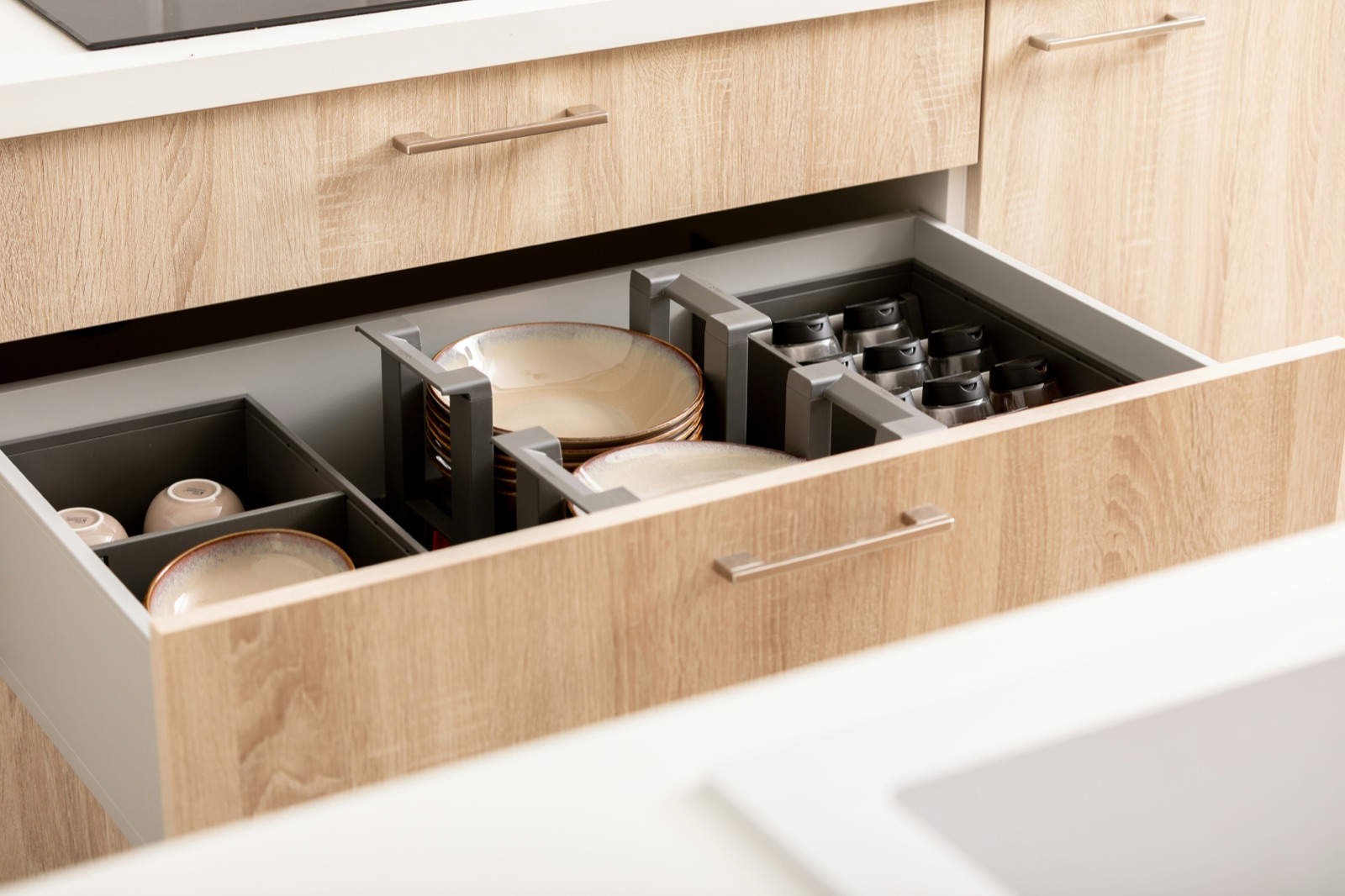
White or light woodgrain melamine is the industry standard for kitchen cabinet interiors. The pre-finished surface requires no finishing time, wipes clean, and reflects light to make cabinets feel larger.
- Kitchen and bath cabinet box interiors
- Interior shelf surfaces in all cabinetry
- Drawer box liners and bottoms
White melamine interior is standard; woodgrain options available to match door material
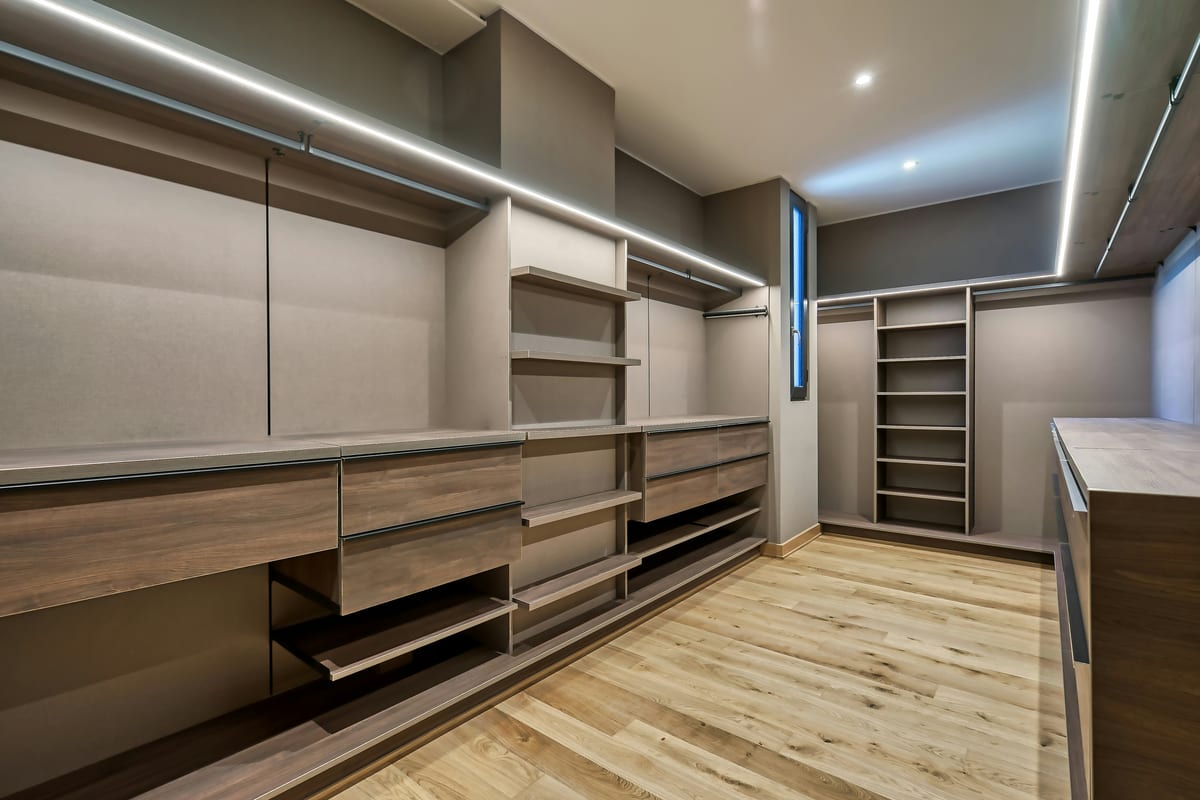
Melamine closet systems deliver clean, durable storage at a price point that makes full walk-in closet customization accessible. The pre-finished surface eliminates painting entirely.
- Shelf towers and hanging sections
- Shoe storage and accessory drawers
- Built-in wardrobe and closet organizer systems
White melamine closet systems are the most common — they make small spaces feel larger
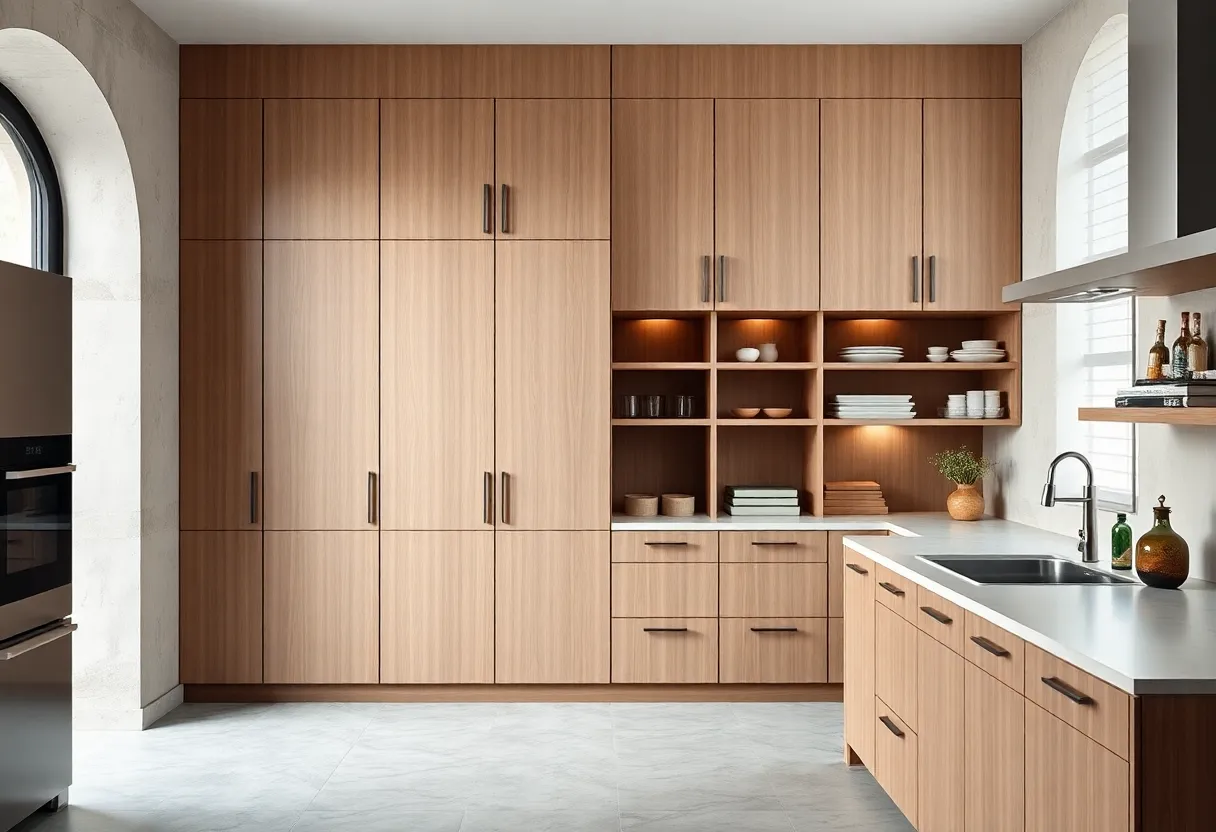
Melamine pantry and laundry shelving delivers functional, cleanable storage at budget pricing. The surface handles cleaning products and food-safe wiping without damage.
- Pantry shelf systems with adjustable heights
- Laundry and utility room storage
- Garage and workshop secondary storage
Edge banding is required on all exposed melamine edges for a finished look
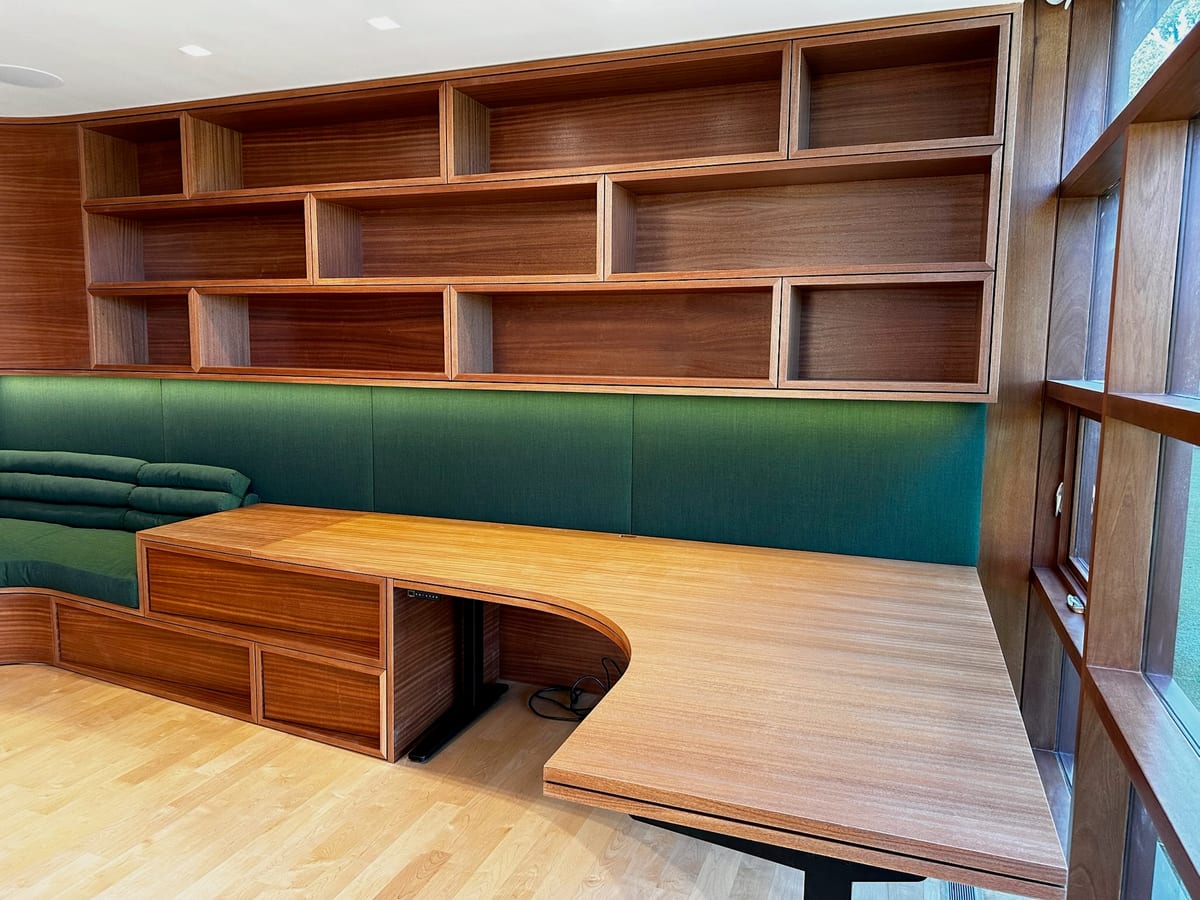
Melamine office storage and workspace cabinetry delivers clean, functional results at a cost that makes high-density storage affordable without the expense of solid wood or plywood alternatives.
- Filing and reference storage systems
- Workstation and desk cabinetry
- Office supply and equipment storage
White and light woodgrain melamine are most common for office environments
How Melamine Cabinets and Casework Are Built
Melamine construction is primarily flat-panel casework -- it is not suited for complex profiles or structural loads that require plywood or solid wood.
Flat-Panel Casework
Melamine panels cut to size, edgebanded on all exposed edges, and assembled with confirmat screws or cam lock hardware. The standard construction method for closet organizers, pantry shelving, and simple cabinetry. No finishing required.
Best For
- Closet systems
- Pantry and utility shelving
- Simple case good construction
Melamine Cabinet Pros and Cons
Melamine is the most efficient material for pre-finished interiors and simple flat casework. Its limitations become apparent in structural and water-exposed applications.
Ideal For
- ✓Cabinet box interiors in any custom cabinetry
- ✓Closet organizer systems where the pre-finished surface is the finish
- ✓Pantry, laundry, and utility shelving on a budget
- ✓Office storage systems requiring clean, wipe-down surfaces
- ✓Applications where painting would add cost but the finish is not a design feature
May Not Be Ideal For
- –Structural applications requiring plywood's strength and screw-holding
- –Moisture-exposed environments -- the particleboard substrate swells badly when wet
- –Applications requiring complex CNC profiles -- melamine surface chips at fine details
- –Natural-finish applications where wood grain and warmth are the goal
- –Premium cabinetry where plywood or solid wood carcasses are expected
How Melamine Compares to Other Panel Materials
Melamine's primary advantage is its pre-finished surface. Its limitations are in structural performance and moisture resistance.
Melamine vs Plywood
- Plywood is far stronger structurally -- better screw-holding and load capacity
- Melamine requires no finishing -- plywood requires paint or veneer
- Plywood handles moisture dramatically better than melamine on particleboard
- Melamine is typically 30-50% less expensive per equivalent square foot
Use plywood for structural components and any moisture-exposed applications; use melamine for pre-finished interiors and simple casework.
View Plywood →Melamine vs MDF
- MDF requires painting to achieve a finished surface; melamine arrives pre-finished
- MDF can be CNC-routed into complex profiles; melamine is limited to flat applications
- Both use similar substrates; melamine's surface layer adds moisture resistance
- Both are budget-tier materials at similar price points
Use MDF where routing and painting are required; use melamine where a pre-finished flat surface eliminates the finishing step.
View MDF →Melamine vs Baltic Birch Plywood
- Baltic birch is void-free and stronger; melamine on particleboard has a weak core
- Baltic birch is the premium drawer box material; melamine is for interiors and simple casework
- Baltic birch with natural finish is more visually interesting
- Melamine is significantly less expensive than Baltic birch
Choose Baltic birch for drawer boxes and quality structural applications; choose melamine for pre-finished interiors and budget casework.
View Baltic Birch Plywood →How Much Do Melamine Cabinets and Closet Systems Cost?
Melamine is one of the most cost-effective materials for cabinet interiors and closet systems, making it a standard choice for budget-conscious cabinetry projects. Its cost advantage is strongest where the pre-finished surface eliminates finishing labor entirely.
Cost Impact by Construction Method
Material Cost
White melamine on particleboard runs $35-55 per 4x8 sheet. Woodgrain and color options run slightly more. High-pressure laminate (HPL) melamine panels cost more.
Includes
- White melamine (most common)
- Woodgrain melamine options
- Color melamine for design applications
Best For
Closet System
A full walk-in closet system in melamine typically runs $2,500-7,000 installed, depending on size and configuration.
Includes
- Melamine shelf and tower components
- Edge banding on all exposed edges
- Hardware and installation
Best For
Budget Kitchen Cabinetry
A kitchen with melamine carcasses and simple painted or thermofoil doors runs $8,000-14,000 installed -- the lowest cost for a fully custom kitchen.
Includes
- Melamine carcasses
- Thermofoil or painted MDF doors
- Basic hardware
Best For
What Actually Drives Melamine Cost
- ·Surface color and texture -- white is least expensive; specialty colors and textures cost more
- ·Substrate thickness -- 5/8 vs. 3/4 inch affects load capacity and cost
- ·Edge banding quality -- iron-on PVC vs. hot-melt glued wood edge
- ·Hardware -- cabinet hardware quality affects functionality more than the panel material
Key Insight
Melamine's real cost advantage is the elimination of finishing labor. In a shop where painters charge $60-100/hour, a melamine interior that requires no finishing represents a genuine and significant savings over a painted panel alternative.
Finishes & Design Guidance
Melamine is most commonly used for cabinet interiors and closet systems where a clean, pre-finished surface eliminates the need for painting or finishing. Its aesthetic is utilitarian and neutral — a functional background for the things stored in front of it.
White Melamine
The most common option. White melamine reflects interior light, making cabinet interiors feel bright and easy to see into. It reads as clean and modern in any context.
Woodgrain Melamine
Woodgrain-printed melamine mimics the appearance of oak, maple, walnut, or other species. It reads reasonably well in person but is clearly printed at close inspection. Best for applications where the grain effect adds warmth without the cost of veneer.
Color Melamine
Melamine panels are available in a range of solid colors beyond white. Black and dark charcoal are increasingly popular for contemporary cabinetry interiors and simple casework.
Pro Tip
Always edge-band every exposed melamine edge -- without banding, the particleboard core is visible and the panel looks unfinished. Use 1mm PVC edge banding applied with a hot-melt glue system for the fastest, most durable result. Thicker 2mm banding is used on premium work.
Design Pairings
Interior pairing
Use Cases
Design Context
Frequently Asked Questions
What is melamine board and how is it made?
How much does melamine board cost compared to plywood?
Is melamine durable enough for kitchen cabinet boxes?
What is the difference between melamine and laminate?
What edge banding is used on melamine cabinets?
Can melamine be CNC machined?
What are the limitations of melamine for cabinetry?
What colors and textures are available in melamine board?
Ready to Get Started?
Tap our network of partner CNC woodworking shops today. Submit your project details and get a competitive, best-match quote from specialists in your area.
Get a Quote