Thermofoil Kitchen Cabinets & Modern Cabinetry
thermally-formed surface -- budget tier
- Seamless, no-grain surface in white, off-white, and solid colors
- The most affordable door option for painted-look kitchen cabinetry
- PVC film wraps around profiles -- no painting required
STEP · STL · IGES · DWG · DXF · PDF · and more
Uploads are secure & confidential
Are Thermofoil Cabinets Good?
Thermofoil cabinets are widely used in modern kitchens and built-ins because they offer a smooth appearance, easy maintenance, and affordable pricing compared to painted hardwood cabinetry.
Thermofoil doors are made by vacuum-pressing a PVC (polyvinyl chloride) film over a shaped MDF substrate. The film wraps around door profiles -- including shaker edges, recessed panels, and routed detail work -- and bonds permanently to the substrate using heat and pressure. The result is a seamless surface with no paint lines, no grain texture, and a consistent appearance across an entire kitchen.
For homeowners who want the clean, painted look of a shaker kitchen without the cost of painted hardwood doors, thermofoil is the primary alternative. It is faster to produce than painted doors (no priming, painting, or sanding), more affordable, and consistent in color across all doors since it is film rather than paint.
The tradeoffs are real: thermofoil doors cannot be repainted when they show wear. And thermofoil's color options, while wide, are preset -- unlike paint, which is infinitely customizable. For the right project -- a budget kitchen renovation or a rental property update -- thermofoil delivers a clean result at the lowest possible door cost.
Do thermofoil cabinets peel? Yes -- but only under specific conditions. The most common failure is heat delamination near ovens, dishwashers, and cooktops, where steam and radiant heat soften the PVC bond over time. Thermofoil from quality manufacturers is significantly more resistant to peeling than low-cost alternatives. Proper installation -- no heat sources within 12 inches, sealed edges -- eliminates most delamination risk in normal kitchen conditions. In low-heat and non-kitchen environments, peeling is rarely a problem.
How OpenSpindle works
We tap our partner network. You get the best-match quote.
Upload your part and we tap our network of partner shops to get you a competitive, all-in quote that is the best match for the job.
One upload
A CAD file or a sketch. That is the whole ask on your end.
Your best-match quote
Sourced from the partner shops set up for your exact part.
All-in, on your timeline
Machining, finishing, and shipping detailed to your turnaround.
Thermofoil Kitchen Cabinets & Modern Interior Applications
Thermofoil is primarily a door material -- it is not used for carcasses or structural components. Its value is in delivering a clean, consistent painted-look finish on cabinet doors at low cost.
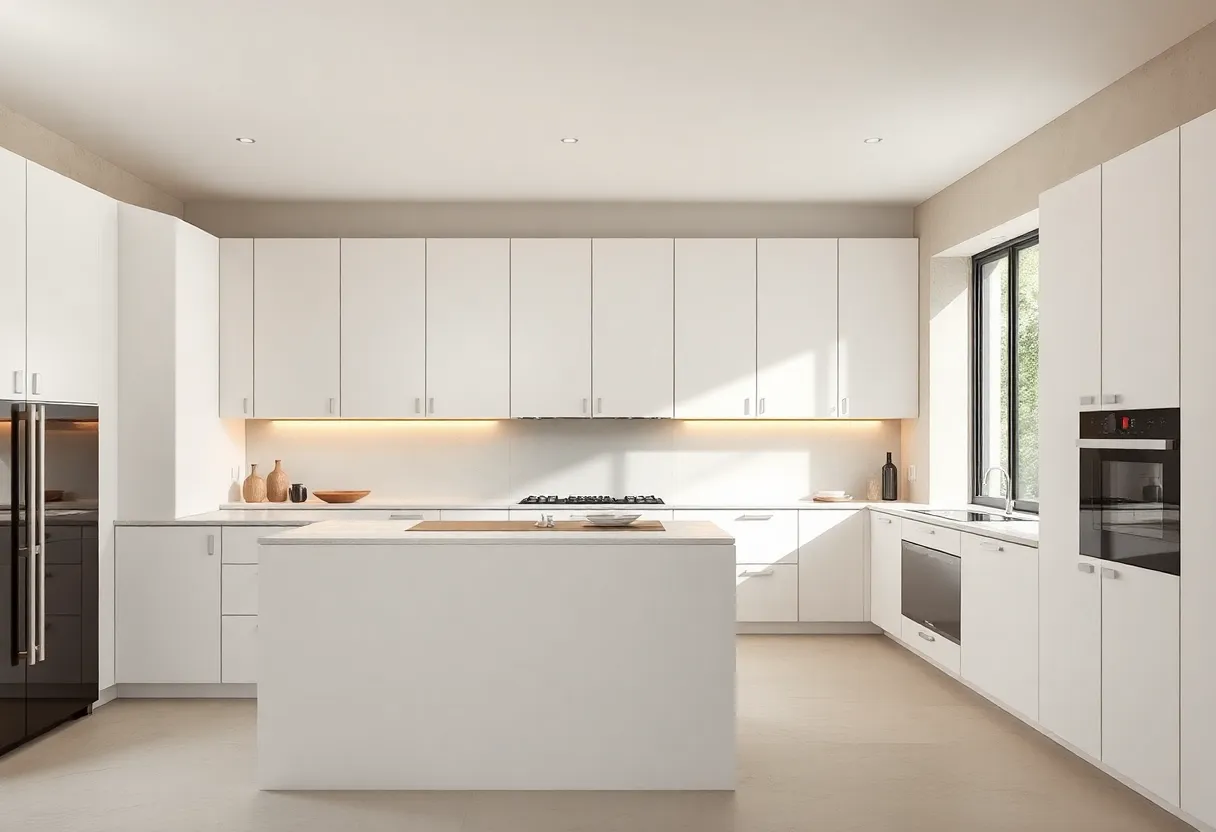
Thermofoil kitchen doors are the most common budget door option for kitchen renovations. They deliver a clean shaker or flat-panel look in white or off-white at a fraction of the cost of painted hardwood doors.
- Shaker-profile doors in white and off-white
- Flat-panel doors for contemporary style
- Full overlay and inset door configurations
Avoid installing thermofoil doors directly adjacent to ovens or dishwashers -- heat causes delamination
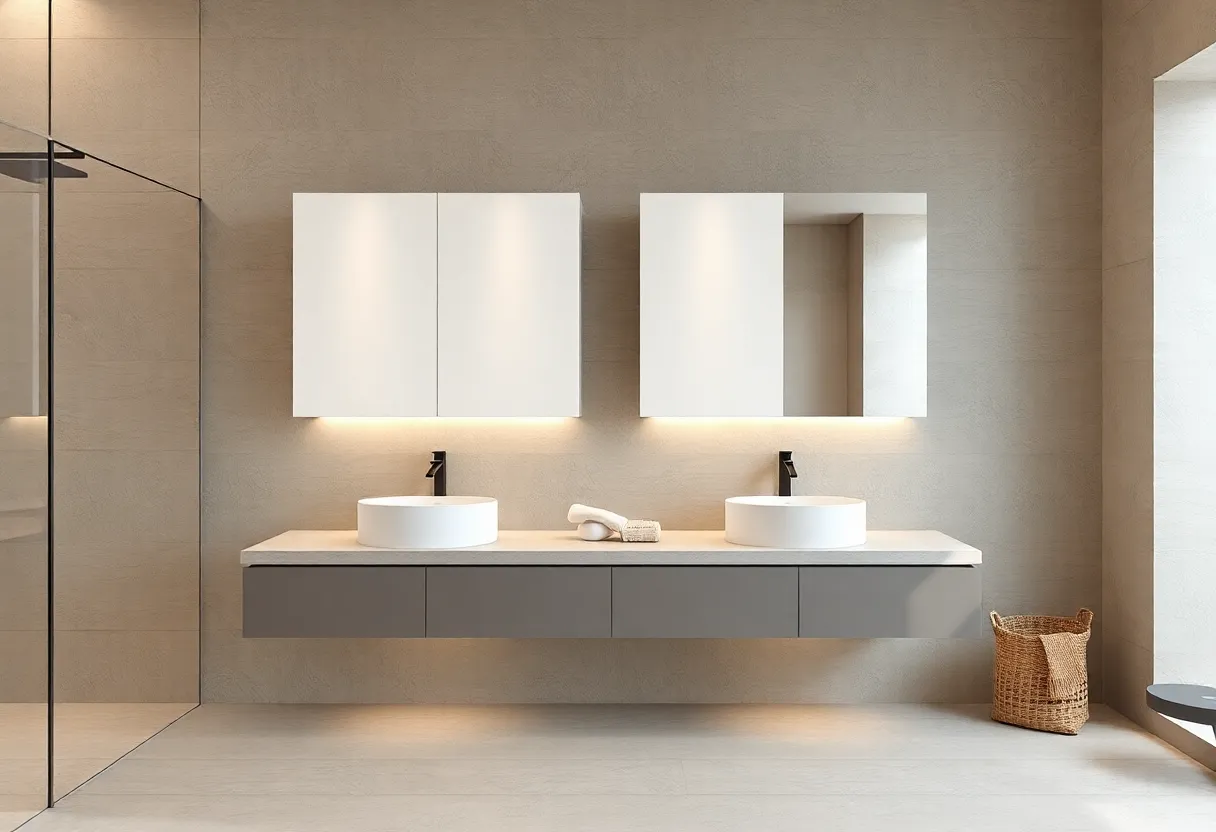
Thermofoil vanity doors deliver the clean white look at a lower price than painted alternatives. They perform well in normal bathroom humidity with proper sealing at all edges.
- Standard and custom vanity door sizes
- White and off-white options for clean modern look
- Shaker and flat profile options
Edge sealing is critical for bathroom thermofoil doors -- exposed MDF edges absorb moisture
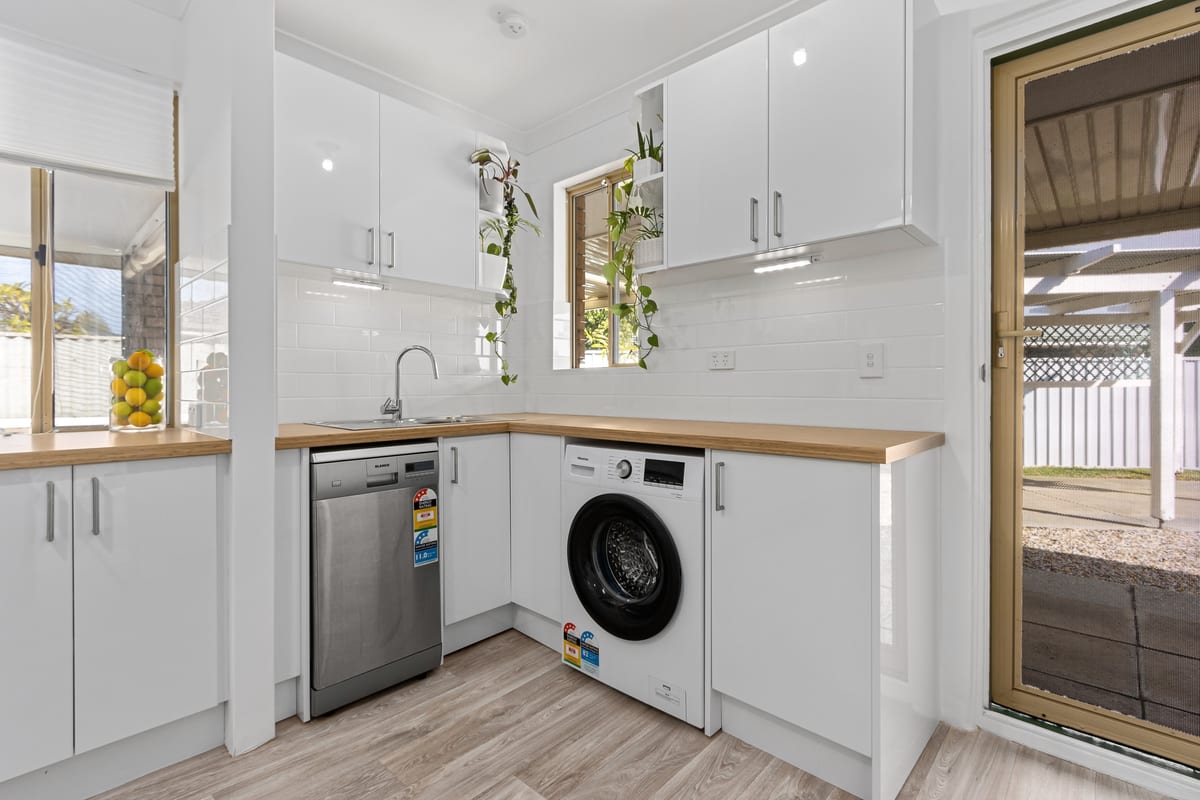
Thermofoil is a practical choice for utility spaces and rental properties where durability and cleanliness matter but design investment is limited. The wipeable surface handles cleaning products without damage.
- Laundry room cabinet doors and drawer fronts
- Rental property and apartment kitchen cabinetry
- Mudroom and utility storage fronts
Keep thermofoil surfaces away from direct heat sources
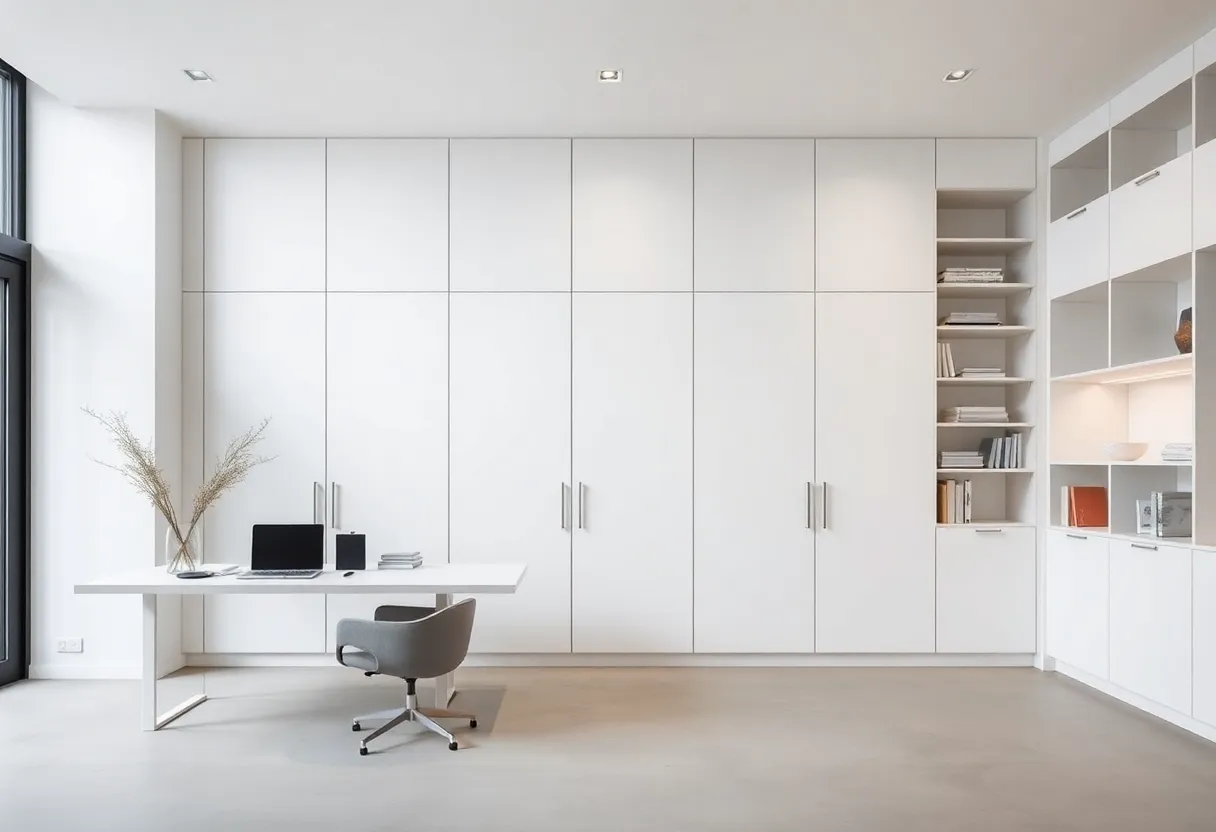
Clean white thermofoil doors on office or studio storage cabinetry deliver a professional, finished look at a cost point that allows more storage density for the budget.
- Office built-in storage and cabinet doors
- Studio and workspace cabinetry
- Home gym and equipment storage
Thermofoil works well in low-humidity, climate-controlled office environments
How Thermofoil Cabinets Are Manufactured
Thermofoil doors are factory-manufactured using a vacuum membrane pressing process. The cabinet shop typically sources them pre-made rather than fabricating in-shop.
MDF Core and Vacuum Pressing
The door substrate is cut from MDF (medium density fiberboard) and CNC-routed into the door profile -- flat, shaker, or raised panel. A PVC thermofoil film is then laid over the door and drawn tight against all surfaces using vacuum pressure and heat. The film bonds permanently to the MDF, wrapping seamlessly around every edge and profile with no seams or paint lines.
Best For
- All thermofoil door profiles -- flat, shaker, and routed
- Consistent finish across any production volume
- Custom door sizing from any quality supplier
Thermofoil Cabinet Pros and Cons
Thermofoil is the right choice for specific project contexts. It fails in others -- understanding the limitations prevents costly mistakes.
Ideal For
- ✓Budget kitchen renovations where a painted look is desired
- ✓Rental property and investment property updates
- ✓Utility spaces where clean appearance matters more than premium materials
- ✓Projects where color consistency across all doors is critical
- ✓Homeowners who prioritize cleaning ease over long-term refinishability
May Not Be Ideal For
- –Kitchens with high heat exposure -- next to ovens, cooktops, or dishwashers
- –Long-term primary residence renovations where refinishing may be desired later
- –Humid environments without proper edge sealing
- –Applications requiring custom or non-standard colors -- thermofoil colors are preset
- –High-end cabinetry where painted hardwood or MDF doors are expected
Thermofoil vs Painted Cabinets, Laminate & Melamine
Thermofoil competes primarily with painted MDF, laminate, and melamine for modern budget and mid-range cabinetry applications.
Thermofoil vs Painted Cabinets
- Painted MDF or hardwood doors can be painted any color; thermofoil colors are preset from the manufacturer
- Thermofoil requires no finishing labor -- painted doors require priming, painting, and sanding steps
- Painted doors can be touched up and repainted when they show wear; thermofoil cannot
- Thermofoil has a more seamless, uniform surface than most painted doors -- no brush marks or grain
- Painted MDF doors typically cost 20-40% more than comparable thermofoil
Choose thermofoil for maximum cost efficiency in standard colors. Choose painted cabinets when custom color options, touch-up capability, or long-term refinishability matter.
View Painted Cabinets →Thermofoil vs Laminate
- Laminate and thermofoil are both pre-finished PVC/plastic surfaces over engineered substrates
- Thermofoil wraps around door profiles and edges; high-pressure laminate is typically flat only
- Laminate is generally more scratch-resistant than thermofoil surfaces
- Thermofoil is more versatile for shaker and routed door profiles; laminate suits flat slab doors
- Both are similarly priced; laminate may cost slightly more for high-pressure grades
Choose thermofoil for profile doors including shaker style. Choose laminate for flat slab doors or applications requiring higher scratch resistance.
View Laminate →Thermofoil vs Melamine
- Melamine is primarily used for flat panel applications and cabinet interiors; thermofoil wraps around profiles
- Both are pre-finished and require no painting or finishing labor
- Melamine is typically less expensive than thermofoil for flat surfaces
- Thermofoil is better for shaker and routed door profiles; melamine is better for flat doors and all interior cabinet surfaces
Use thermofoil for door profiles including shaker style. Use melamine for flat panel doors and all interior cabinet box surfaces.
View Melamine →How Much Do Thermofoil Kitchen Cabinets Cost?
Thermofoil cabinets are generally more affordable than painted hardwood cabinetry while still offering a smooth, contemporary appearance.
Cost Impact by Construction Method
Material Cost
Thermofoil doors run $20-60 per door depending on size and profile. A full kitchen door package (20-24 doors) typically costs $700-1,800.
Includes
- Standard shaker and flat profile options
- White, off-white, and standard color options
- Custom sizing available from suppliers
Best For
Budget Kitchen Renovation
A full kitchen renovation using thermofoil doors on new or existing carcasses typically runs $7,000-13,000 installed.
Includes
- New thermofoil door package
- Plywood or melamine carcasses
- Standard hardware
Best For
Door Replacement Only
Replacing only the doors on existing cabinet carcasses with thermofoil runs $1,500-4,500 for a standard kitchen -- the most cost-effective kitchen update available.
Includes
- New thermofoil doors measured to existing boxes
- Installation of doors and drawer fronts
- Hardware replacement if needed
Best For
What Actually Drives Thermofoil Cost
- ·Door size -- larger doors cost more; custom sizes add to order minimums
- ·Profile complexity -- flat doors cost less than shaker; raised panel costs more
- ·Color options -- white is standard; specialty colors may add cost
- ·Quantity -- larger orders reduce per-door cost from most suppliers
Key Insight
Thermofoil's best value case is a door-replacement-only kitchen refresh -- keeping existing cabinet boxes and replacing only the doors and drawer fronts. This approach can transform a dated kitchen for $1,500-4,500, a fraction of the cost of a full renovation.
Finishes & Design Guidance
Thermofoil is commonly used in contemporary and transitional kitchens where clean lines, low maintenance, and consistent color are priorities. Its aesthetic is clean, uniform, and neutral -- the seamless PVC surface eliminates paint lines, brush marks, and grain texture.
White and Off-White
The most common thermofoil options. White thermofoil matches most modern kitchen aesthetic requirements and coordinates with any countertop, hardware, or tile. The seamless surface is cleaner-looking than painted MDF in many conditions.
Solid Color Options
Thermofoil is available in a range of solid colors including gray, sage, navy, and occasionally black. Color options are manufacturer-dependent and less customizable than paint.
Woodgrain Thermofoil
PVC film printed to mimic wood grain, applied over shaped MDF. The woodgrain effect is most convincing from a distance and in low-traffic areas. Up close, the printed grain is identifiable.
Pro Tip
When specifying thermofoil doors, verify that the supplier uses a continuous PVC film with no seams on the door face. Some lower-cost thermofoil doors have seams at corners or profile transitions that can peel over time. A quality thermofoil door should have seamless film coverage on all faces and edges.
Design Pairings
Hardware
Countertops
Design Context
Frequently Asked Questions
What is thermofoil and how is it used in cabinetry?
How much do thermofoil cabinets cost compared to wood?
How durable is thermofoil for kitchen use?
Can thermofoil cabinet doors be repaired if they peel?
What are the pros and cons of thermofoil cabinets?
Is thermofoil the same as laminate?
What substrate is used under thermofoil cabinet doors?
How do you clean and maintain thermofoil cabinets?
Ready to Get Started?
Tap our network of partner CNC woodworking shops today. Submit your project details and get a competitive, best-match quote from specialists in your area.
Get a Quote