Cherry Wood Furniture, Cabinets & Custom Millwork
Hardwood prized for fine grain, smooth CNC machining, and a rich natural patina that deepens with age.
- Janka 950 -- fine, closed grain that machines and finishes beautifully
- Deepens to a rich reddish-brown patina over years of natural light exposure
- The traditional choice for heirloom furniture, cherry kitchen cabinets, and custom millwork
STEP · STL · IGES · DWG · DXF · PDF · and more
Uploads are secure & confidential
Why Cherry Wood Is Used in Furniture, Cabinets & Millwork
Cherry wood is widely used in furniture and cabinetry due to its fine grain, smooth machining properties, and ability to develop a rich natural patina over time.
American black cherry is one of the few domestic hardwoods that actively improves with age. Fresh from the mill it's a pale blush-pink -- but within a year of light exposure it deepens into the warm reddish-brown that made American Federal-period furniture famous.
Cherry machines exceptionally well. Its fine, closed grain responds cleanly to CNC routing and produces crisp profile detail without tearout. It takes clear finishes without blotching, though staining requires a conditioner because of uneven absorption. Most craftsmen let cherry be cherry: clear finish, no stain, let the wood develop naturally.
In custom work, cherry is the traditional choice for bedroom furniture, dining rooms, kitchen cabinetry, and executive offices -- anywhere the finished piece needs to feel established rather than trendy.
How OpenSpindle works
We tap our partner network. You get the best-match quote.
Upload your part and we tap our network of partner shops to get you a competitive, all-in quote that is the best match for the job.
One upload
A CAD file or a sketch. That is the whole ask on your end.
Your best-match quote
Sourced from the partner shops set up for your exact part.
All-in, on your timeline
Machining, finishing, and shipping detailed to your turnaround.
Cherry Wood Furniture, Cabinets & Millwork Applications
Cherry's fine grain, warm tone, and excellent machining properties make it the go-to choice for heirloom-quality furniture and cabinetry. It excels wherever the wood will be seen and appreciated up close.
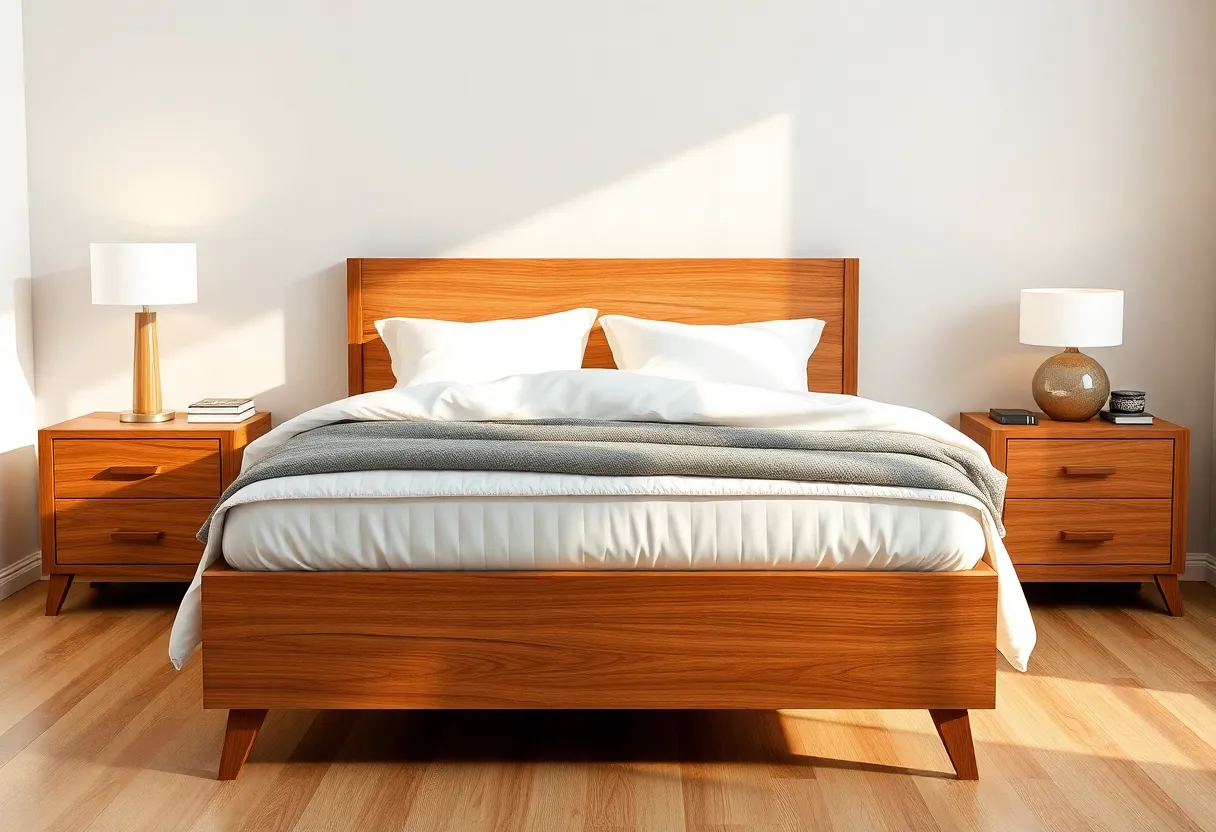
Cherry is the classic choice for bedroom furniture. Bed frames, dressers, nightstands, and armoires built in cherry develop character and depth over time that painted alternatives cannot replicate.
- Bed frames with CNC-routed panel detail
- Dresser cases with hand-fitted drawer fronts
- Armoires and wardrobes in solid cherry construction
- Heirloom commissions built to last generations
Cherry bedroom furniture is among the most requested heirloom commissions
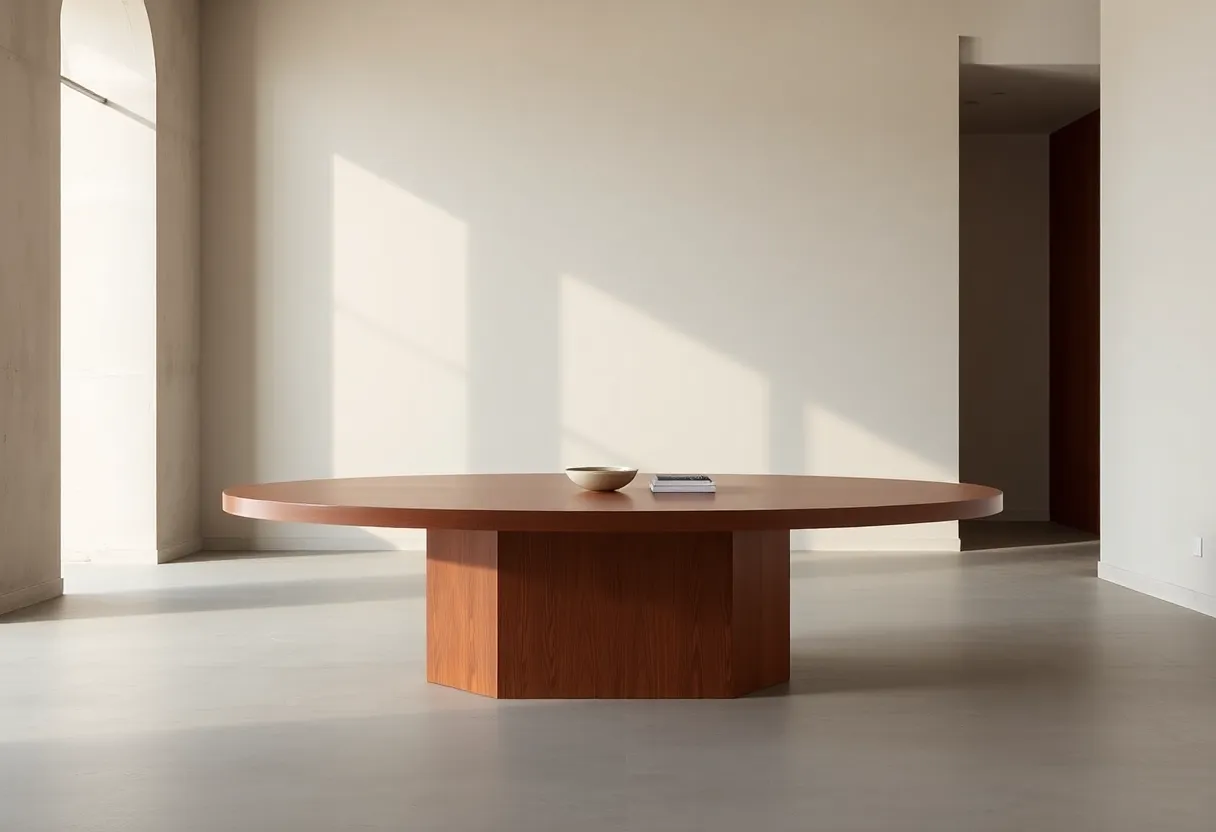
A solid cherry dining table is a long-term investment. The surface improves with age, minor scratches blend into the patina, and the warm tone makes every meal feel like an occasion.
- Pedestal and trestle base dining tables
- Breadboard-end construction for long-term stability
- Storage furniture and accent pieces
- Matching bench and chair components
Cherry lightens slightly in the short term before settling into its final rich tone
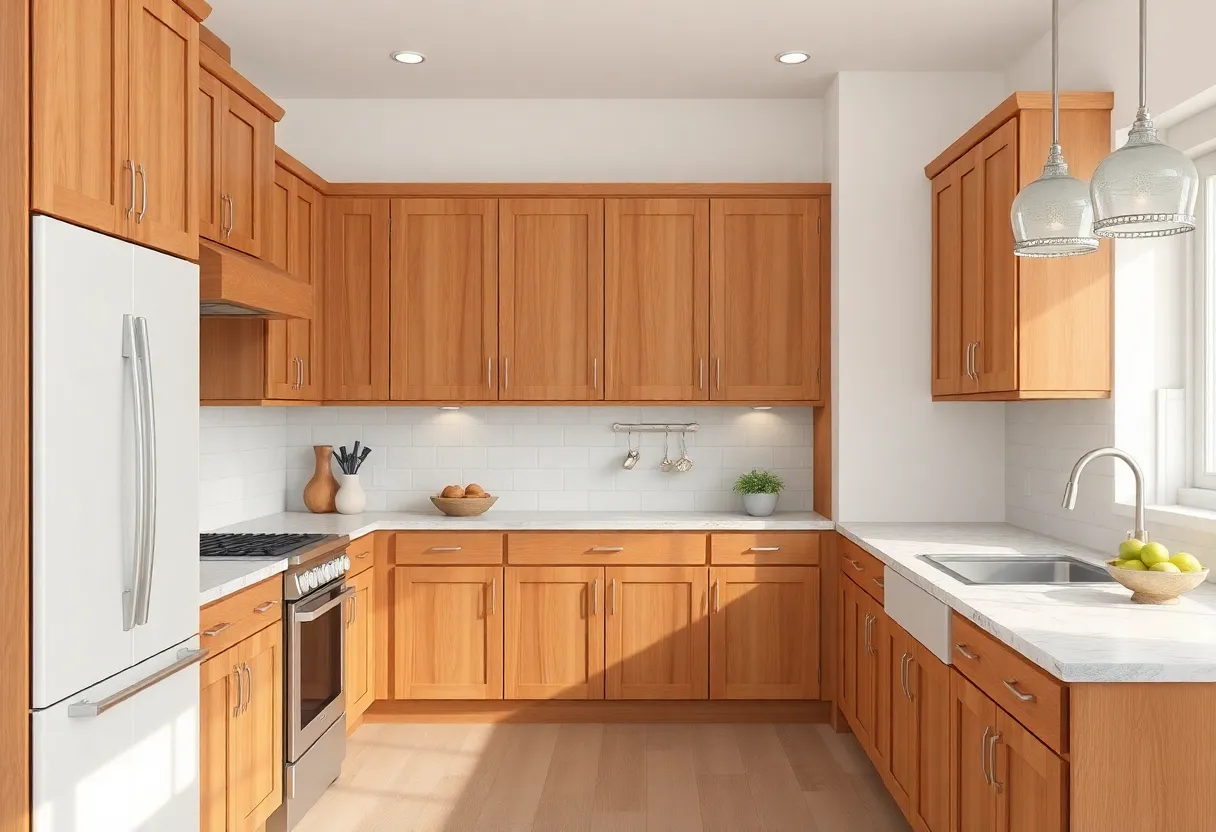
Cherry cabinets are commonly used in traditional and transitional kitchens where warmth, fine grain detail, and natural finish character are the priority. Raised-panel profiles in cherry are a hallmark of classic American cabinetry.
- Raised panel and arched door profiles
- Face-frame construction with fitted drawer boxes
- Natural or lacquer finish to showcase patina development
- Custom cherry bath vanities and built-in cabinetry
Most customers finish with clear lacquer and let the wood darken naturally over time
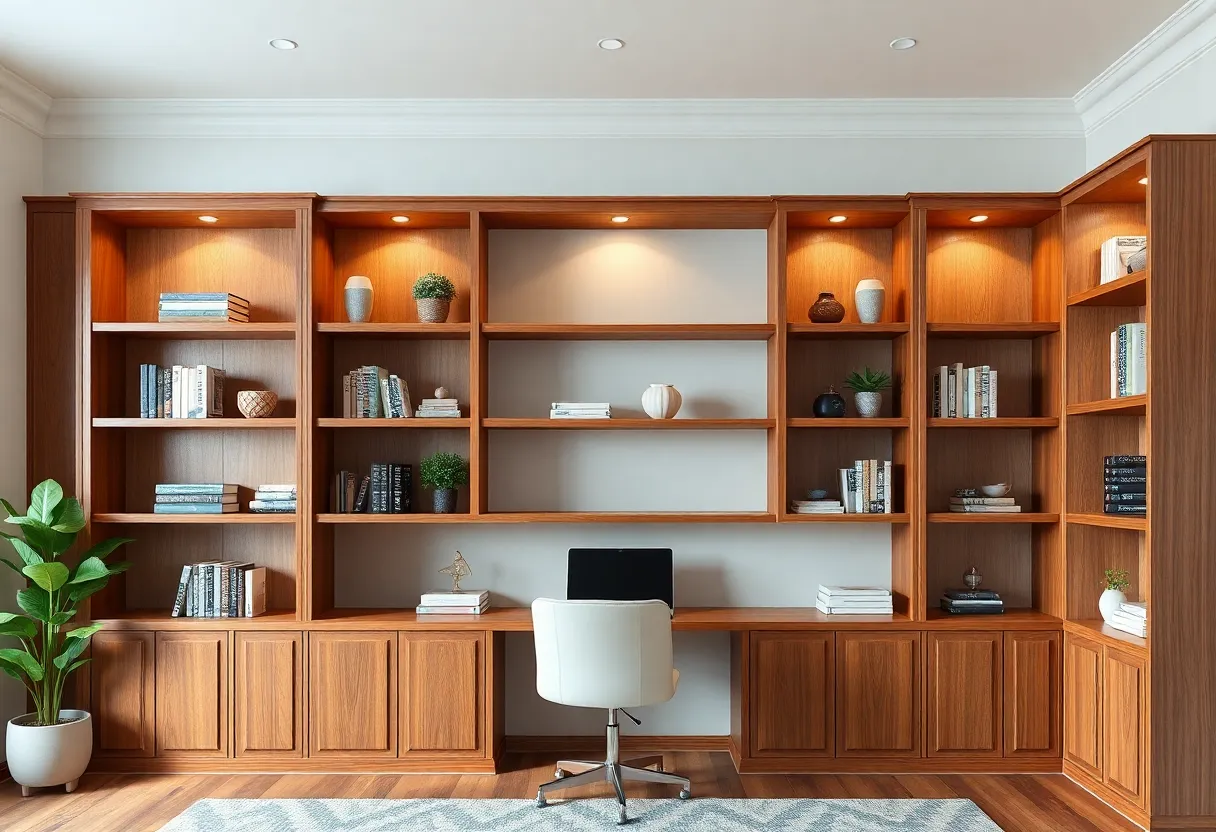
Built-in bookcases and office cabinetry in cherry read as serious and established. The fine grain holds detail in crown molding and pilaster profiles that make built-ins look custom rather than kit-built.
- Floor-to-ceiling bookcase surrounds with fluted pilasters
- Integrated desk surfaces and filing drawer bases
- Library walls with glass mullion cabinet doors
- Executive office built-in shelving systems
Cherry office built-ins are common in law firms, executive offices, and home libraries
How Cherry Furniture and Cabinets Are Built
Cherry is suitable for solid wood construction, veneer work, and mixed approaches. The choice depends on scale and the importance of visible end-grain.
Solid Cherry
Full-thickness cherry boards used throughout -- the traditional approach for furniture and fine cabinetry. Solid cherry can be refinished and repaired over decades, making it the right choice for heirloom-grade work.
Best For
- Bedroom and dining furniture
- Face frames and door profiles
- High-end cabinetry commissions
Is Cherry Wood Good for Furniture and Cabinets?
Cherry is an excellent choice for furniture, cabinetry, and traditional millwork -- with clear limitations for high-wear and paint-grade applications.
Ideal For
- ✓Develops a rich natural patina over time -- one of the defining characteristics of the species
- ✓Machines exceptionally well for CNC routing -- crisp profiles without tearout
- ✓Fine closed grain ideal for detailed door profiles, moldings, and millwork
- ✓Widely used in high-end furniture and traditional kitchen cabinetry
- ✓Bedroom, dining room, and office applications where patina development is welcome
May Not Be Ideal For
- –Softer than oak and maple -- can dent more easily under heavy impact
- –Darkens unevenly under direct sunlight -- avoid uneven UV exposure in early months
- –Not ideal for high-impact commercial surfaces or heavy-use work counters
- –Paint-grade cabinetry -- cherry's fine grain is wasted under opaque paint
- –High-moisture environments without proper sealing
How Cherry Compares to Other Woods
Cherry occupies a specific niche -- softer than oak and maple, warmer than walnut, with a unique patina characteristic that sets it apart from every other domestic hardwood.
Cherry vs Walnut
- Both are premium mid-tier hardwoods used for furniture and cabinetry
- Walnut has immediate rich color; cherry starts pale and deepens over time
- Walnut is harder (Janka 1010 vs 950) and more dent-resistant for furniture
- Cherry's fine grain produces more delicate profile detail for millwork and doors
Choose walnut for bold, immediate impact; choose cherry when you want furniture and cabinets that build character over years.
View Walnut →Cherry vs White Oak
- White oak is harder (Janka 1360) and more durable for kitchen and high-traffic use
- Cherry is warmer and more traditional; white oak is cooler and contemporary
- White oak handles moisture better -- better suited for kitchen cabinetry near sinks
- Cherry's fine grain takes detailed profiles more cleanly than oak's open grain
Choose white oak for contemporary kitchens and durable applications; choose cherry for traditional furniture and millwork where warmth is the priority.
View White Oak →Cherry vs Hard Maple
- Hard maple is significantly harder (Janka 1450 vs 950) and more durable
- Maple excels for paint-grade cabinetry; cherry is wasted under opaque paint
- Cherry has far more visual character than maple's plain, even grain
- Both are similar in price per board foot for furniture-grade material
Choose hard maple when paint is the plan; choose cherry when natural grain and patina development are part of the design.
View Hard Maple →How Much Do Cherry Wood Furniture and Cabinets Cost?
Cherry prices similarly to white oak and is significantly less than premium walnut. Cost reflects its availability, machining quality, and demand for high-end work.
Cost Impact by Construction Method
Cherry Furniture
Custom cherry furniture -- a dining table, bedroom set, or accent pieces -- typically runs $4,000-8,000 for a complete suite. Individual pieces range from $800-3,500.
Includes
- Solid select-grade cherry
- Clear lacquer or hardwax oil finish
- CNC-profiled joinery and details
Best For
Cherry Kitchen Cabinets
A custom cherry kitchen runs $16,000-30,000 installed with face-frame construction, raised-panel doors, and a clear or lacquered finish.
Includes
- Solid cherry face frames and door profiles
- Veneered or solid cherry cabinet sides
- Natural clear or lacquer finish
Best For
Heirloom Commission
Hand-fitted joinery, raised-panel doors, carved details, and furniture-grade hand-rubbed finishes can push $40,000+ for complex cabinetry or full library installations.
Includes
- Premium figured cherry throughout
- Inset or traditional joinery
- Hand-rubbed oil or wax finish
Best For
What Actually Drives Cherry Cost
- ·Door profile complexity -- raised panel vs. flat panel
- ·Lumber grade -- clear vs. figured cherry
- ·Construction type -- solid vs. mixed vs. veneered
- ·Finish -- lacquer is faster than hand-rubbed oil and wax
Key Insight
Cherry is often the best value in traditional or transitional projects because the natural patina does the design work over time -- reducing the need for expensive staining and touch-up across the life of the piece.
Best Finishes for Cherry Wood Furniture and Cabinets
Cherry is most often finished clear to allow natural patina development, which is one of its defining characteristics. The pale blush of new cherry transforms into a rich reddish-brown over years -- a depth that manufactured finishes cannot replicate.
Natural and Clear Finishes
A clear finish on cherry lets the wood's natural patina develop freely while protecting the surface. This is the most common approach for furniture and cabinetry, and the one most craftsmen recommend.
Toned and Light Stain
A light amber toner over a sealer coat can accelerate the aged appearance and deliver consistent color from day one. Pre-conditioner is required before any stain to prevent blotching.
Dark and Ebonized
Cherry accepts dark stains well when properly conditioned. Ebonized cherry creates a dramatic, contemporary result that's unexpected for the species -- useful for accent pieces and mixed-material interiors.
Pro Tip
Protect new cherry from direct sunlight for the first 3-6 months. Uneven UV exposure causes patchy darkening -- objects left on surfaces leave light-colored shadows that take years to even out. Consistent, indirect light exposure produces the best result.
Design Pairings
Hardware
Countertops
Design Styles
Frequently Asked Questions
What is cherry wood and what makes it distinctive?
How much does cherry lumber cost per board foot?
Does cherry change color over time?
Is cherry good for kitchen cabinets?
Does cherry stain well?
How does cherry compare to walnut for cabinetry?
What finish is best for cherry cabinets?
What are the best applications for cherry wood in a home?
Ready to Get Started?
Tap our network of partner CNC woodworking shops today. Submit your project details and get a competitive, best-match quote from specialists in your area.
Get a Quote