CNC Routing for Custom Cabinet Doors, Drawer Fronts & Casework
Precision CNC fabrication for modular cabinetry systems, kitchens, and built-ins.
STEP · STL · IGES · DWG · DXF · PDF · and more
Uploads are secure & confidential
This page covers CNC routing specifically for cabinet manufacturing -- door styles, box construction, hardware integration, and cabinet-specific workflows. For general CNC routing capabilities across all materials (plastics, composites, foam, aluminum, and hardwood), see CNC Routing Services.
CNC routing is the production backbone of modern custom cabinet manufacturing. Where traditional cabinetry requires individual setups for each panel, CNC fabrication produces complete cabinet components -- doors, drawer fronts, boxes, and face frames -- directly from design files, with consistent dimensions across every part in a run. Cabinet shops that integrate CNC routing deliver faster turnaround, tighter tolerances, and more design flexibility than traditional hand-cut methods allow.
What CNC Routing Builds for Custom Cabinetry
CNC routing produces every flat and profiled component in a cabinet system:
Cabinet Doors are the most design-variable component. Slab doors are cut from sheet stock -- typically MDF for painted applications or hardwood for stained and natural finishes. Shaker doors use CNC-cut stiles and rails assembled with a floating center panel. Raised-panel doors use CNC-profiled edges on the router to create the traditional raised-panel profile. All door styles emerge from the same CNC process -- the design file determines the style.
Drawer Fronts are cut to the exact reveal dimensions of the cabinet opening. CNC routing ensures that every drawer front in a run has consistent sizing, which is critical for the uniform appearance that defines quality cabinetry. Decorative edge profiles on drawer fronts are routed in the same setup as the front panel cut.
Cabinet Boxes and Casework Panels -- the structural carcass of the cabinet -- are cut from plywood sheet stock. CNC routing produces sides, tops, bottoms, and shelves dimensioned to the exact tolerances that drawer slide and hinge systems require. Dado cuts for shelf pins, hinge cup hole patterns (35mm boring for European hinges), and drawer slide mounting features are all cut in the same CNC setup.
Built-In Furniture Components -- bookshelves, media centers, mudroom lockers, home office systems -- use the same CNC workflow as kitchen cabinetry. Any box-based furniture construction with flat or profiled panel components is a natural CNC application.
Cabinet Types and Construction Systems
Modern Slab Cabinets use flat doors and drawer fronts with no profile or routed detail. Simple to produce in volume and the standard for contemporary kitchen design. Slab doors are the fastest CNC output per door and the least expensive to fabricate.
Shaker Cabinets use a five-piece door: four stiles and rails with a center floating panel. The frame members are CNC-cut for consistent width and length; the center panel is either a flat MDF panel or a plywood panel with or without a routed profile. Shaker is the most widely specified style in North American custom cabinetry.
Frameless European Cabinets use a box with no front face frame. The door covers the full front of the box in a full-overlay configuration. Frameless construction requires precise box tolerances -- the cabinet front edge is visible and finished. CNC-cut boxes are the natural production method for frameless construction.
Inset Cabinet Systems use doors and drawer fronts that sit flush inside the cabinet face frame opening, with a small consistent gap on all sides. Inset cabinets require the tightest tolerances of any cabinet style -- door sizing and hinge placement must be precise to maintain a consistent reveal. CNC-fabricated components deliver the dimensional consistency inset cabinetry requires.
Workflow: From CAD File to Assembly-Ready Parts
CNC cabinet fabrication follows a defined workflow that front-loads setup into the design phase:
CAD/CAM Cabinet Design -- Cabinet design software (KCD, Cabinet Vision, 2020 Design, or SketchUp with cutlist plugins) generates dimensioned part lists and CNC-ready cut files. Design changes propagate across all parts automatically. The design file determines every cabinet dimension and hardware location before the first cut.
Sheet Nesting -- Parts are algorithmically arranged on sheet stock to minimize waste. A full kitchen's worth of MDF door blanks and plywood box panels is nested across sheets before cutting begins. Efficient nesting reduces material cost on every job.
CNC Cutting -- Panels are loaded onto the vacuum hold-down table, the program runs, and components emerge cut to spec. A vacuum hold-down system keeps thin panels flat through deep profile cuts. Compression-spiral bits produce clean top and bottom edges on plywood panels with no tear-out. The CNC produces parts in batch -- a day's production might be a full kitchen's worth of doors, drawer fronts, and box panels.
Assembly-Ready Output -- Parts come off the CNC with all holes drilled, all profiles cut, and all dimensions correct. Hinge cup holes are bored in the door during the same cutting program. Shelf pin holes are drilled in the cabinet sides. Drawer slide mounting features are cut in the box. The assembler has parts that fit without adjustment.
Materials for CNC Cabinet Manufacturing
MDF (Medium-Density Fiberboard) is the standard substrate for painted cabinet doors and drawer fronts. Its smooth, grain-free surface accepts primer and paint without the grain-raise issues that affect solid wood. MDF machines cleanly with sharp profiles and is dimensionally stable for door applications.
Plywood is the standard for cabinet box construction. Baltic birch and furniture-grade plywood have void-free cores that hold fasteners and machine cleanly on cross-grain edges. Plywood is preferred over MDF for box panels because of its superior screw retention and dimensional stability.
Solid Hardwood -- maple, oak, cherry, walnut -- is used for face frames, door stiles and rails, and premium drawer boxes. Solid wood CNC routing requires compression-spiral bits and careful feed rates to manage grain direction, but produces furniture-grade edges that MDF and plywood cannot match.
Hardware Integration
CNC cabinet fabrication is designed around hardware integration. The three main hardware categories are specified at the design stage and built into the CNC cut files:
Hinges -- European concealed hinges (standard 35mm cup) are bored on the CNC during the door cutting program. Hinge placement is calculated from the design file -- typically 100mm from the top and bottom of the door -- and every door in a run has consistent, accurate hinge locations. No layout marks, no measurement errors.
Drawer Slides -- Metal drawer slide systems are dimensioned into the cabinet box at the design stage. Undermount slides require a specific bottom panel clearance; side-mount systems require mounting hole patterns in the box sides. CNC-cut boxes are dimensioned to the exact tolerances of the specified slide system.
Soft-Close Mechanisms -- Soft-close integrated into the slide or hinge system requires no additional fabrication work -- the CNC produces the same components, and soft-close hardware installs into the same mounting geometry as standard hardware.
Who Uses CNC Cabinet Fabrication
Kitchen Cabinet Makers -- Whether producing custom kitchen cabinets for a single home or running semi-custom production for multiple projects simultaneously, kitchen cabinet shops use CNC routing to produce consistent components at volume. The design file becomes the quality control mechanism.
Millwork Shops -- Architectural millwork shops use CNC routing for built-in furniture, entertainment centers, home offices, and any cabinet-based project that requires custom dimensioning. The CNC handles the dimensional work; the millwork shop handles the joinery, finishing, and installation.
Residential and Commercial Designers -- Designers who specify custom cabinetry benefit from CNC fabrication's ability to execute precise design intent. Consistent reveals, matched door sizing, and exact hardware placement are deliverable outcomes of the CNC process that hand-built methods cannot guarantee at scale.
Commercial Builders -- Multi-unit residential, hospitality, and commercial projects require identical cabinetry across many rooms or units. CNC routing produces matched sets from the same design file -- every unit's kitchen has the same door sizes, the same hardware locations, and the same assembly geometry.
Equipment used
- 3-axis CNC router with vacuum hold-down table
- 35mm boring head for European hinge cup holes
- Compression-spiral tooling for clean plywood cross-grain edges
- Nested-based manufacturing workflow (sheet nesting software)
Tolerances
±0.005 in. on panel profile geometry; ±0.010 in. on assembled cabinet box dimensions; 35mm hinge cup placement ±0.5mm
Frequently Asked Questions
What is CNC routed cabinet fabrication?
What tolerances do you hold on CNC routed cabinet parts?
What sheet goods can you CNC rout for cabinet production?
Can you drill shelf pin holes and hardware locations during CNC routing?
How much does CNC routed cabinet cutting cost?
What file formats do you accept for cabinet cutting?
Can you cut dados, rabbets, and grooves for cabinet assembly?
Do you nest parts to minimize sheet material waste?
What is the lead time for CNC routed cabinet parts?
How do I get a quote for CNC routed cabinet parts?
Ready to Get Started?
Tap our network of partner CNC woodworking shops today. Submit your project details and get a competitive, best-match quote from specialists in your area.
Get a QuoteRelated
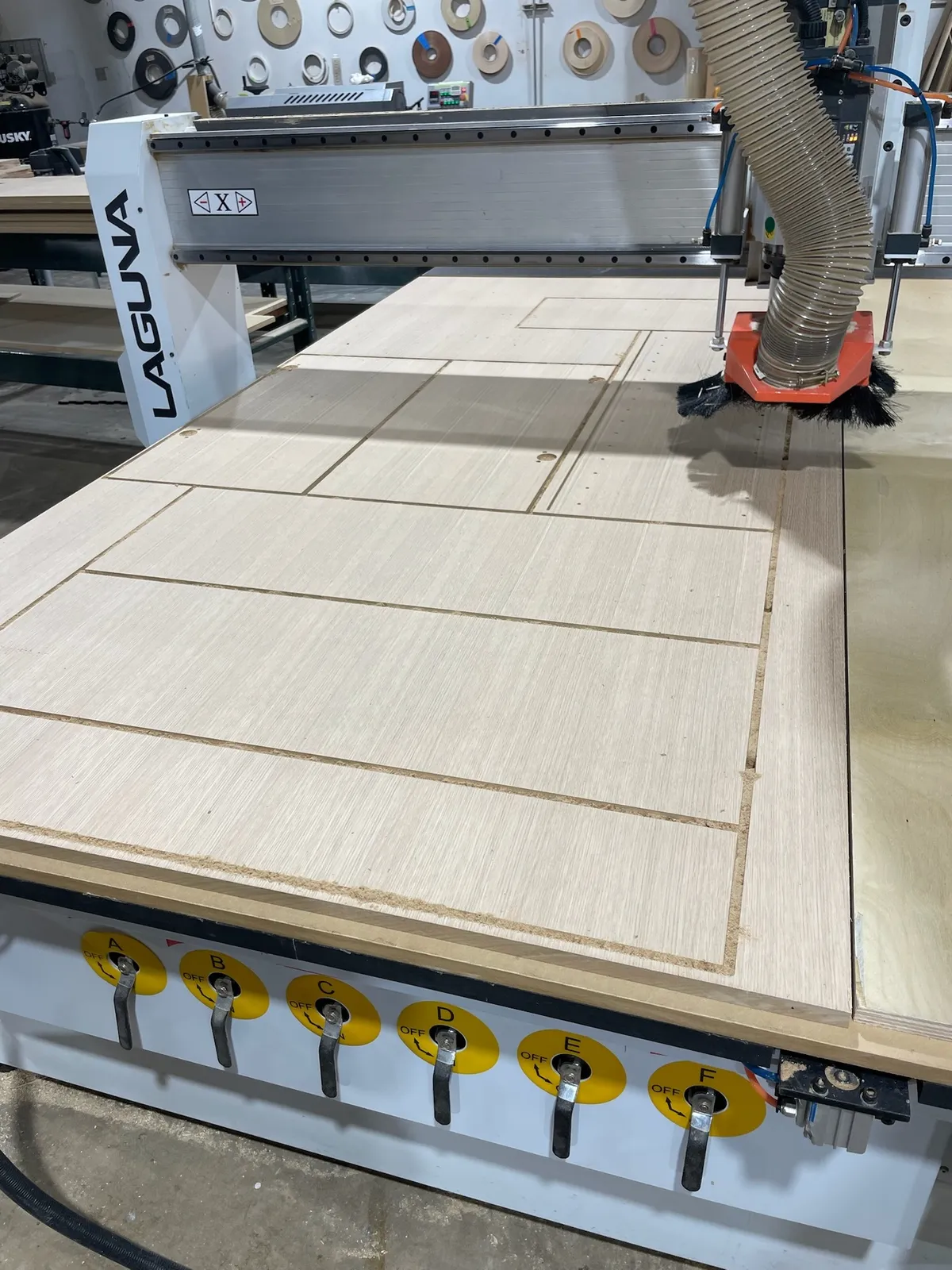
CNC Routing Services for Wood, Plastics, Composites & Custom Fabrication
Precision CNC routing for wood, MDF, plywood, plastics, composites, and aluminum. Cabinet parts, signage, and millwork from partner fabrication shops.
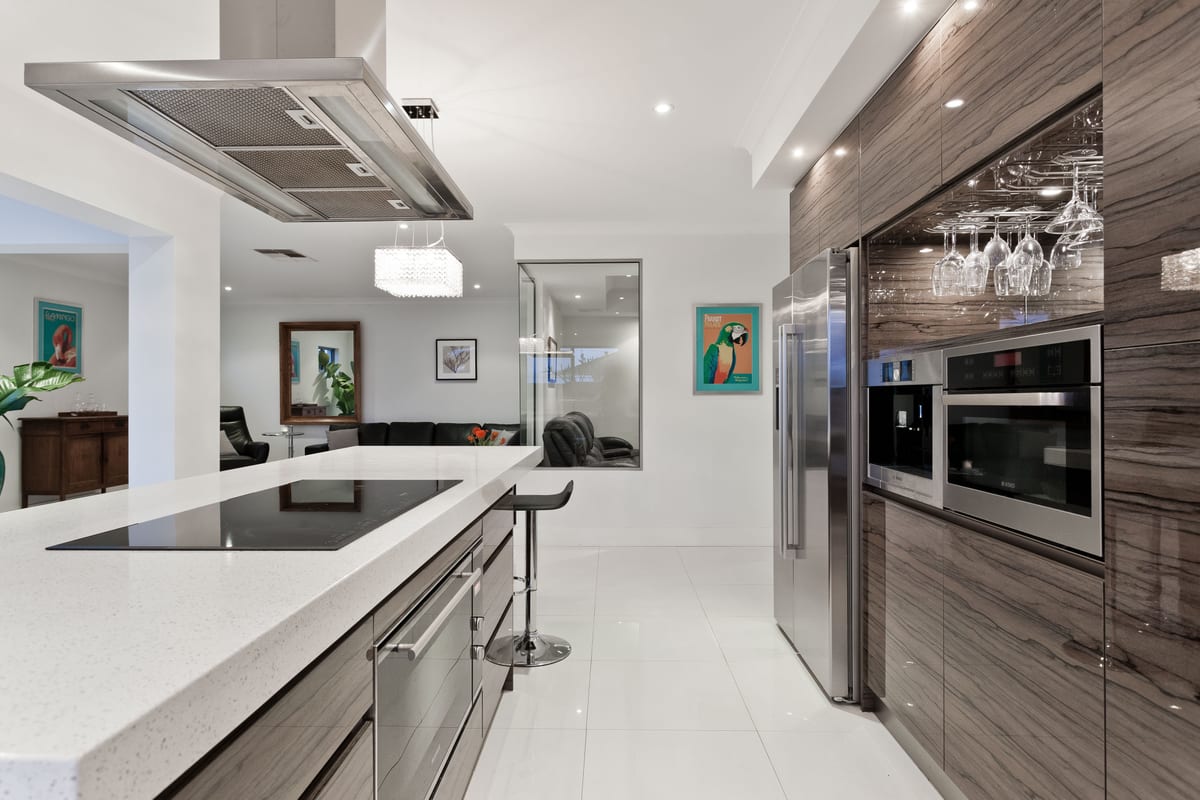
Custom Kitchen Cabinets: Get a Quote from Partner Shops
Get a free quote from partner custom kitchen cabinet makers near you. Review pricing, lead times, and portfolios.
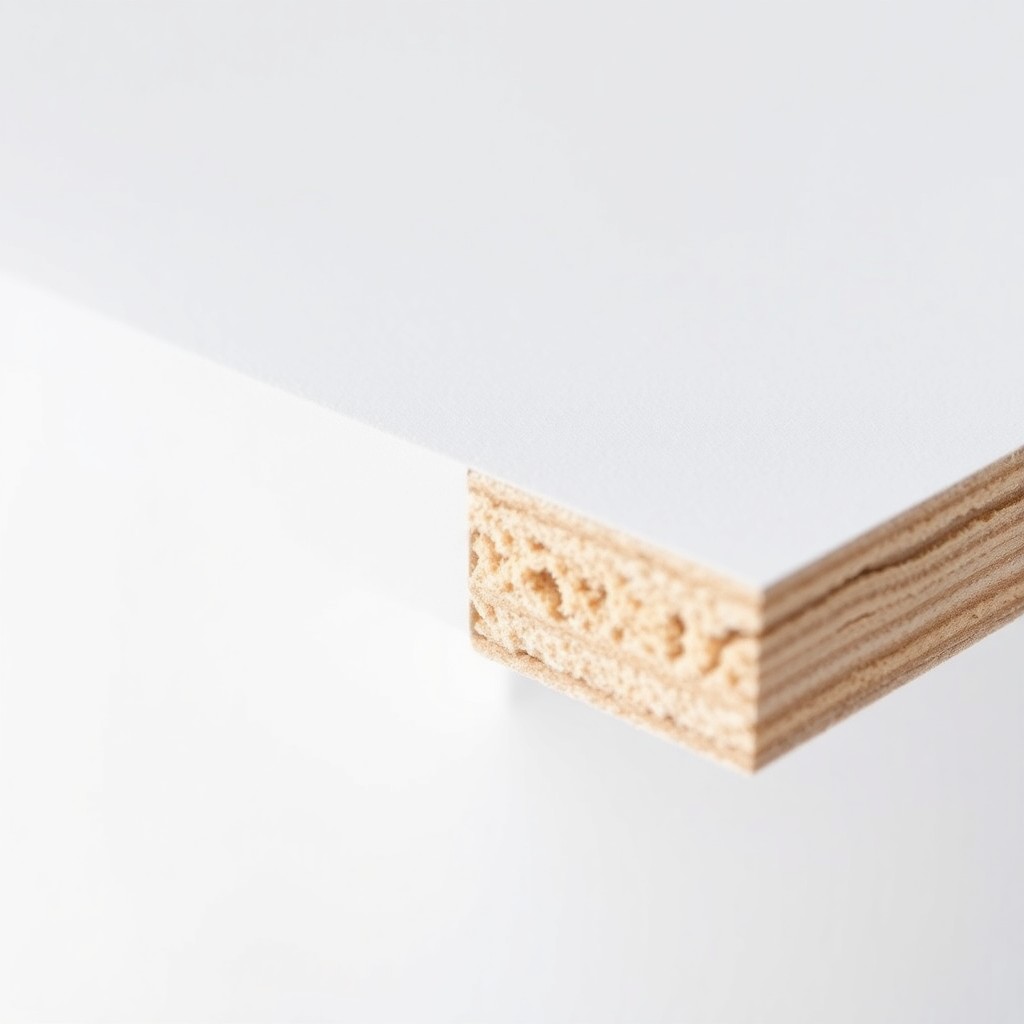
Custom MDF Cabinets, Doors & Painted Millwork
MDF is the industry standard for painted cabinet doors, built-ins, and interior millwork. Get custom MDF projects built to spec by partner CNC shops.
Plywood Cabinets, Cabinet Boxes & Structural Cabinetry
Cabinet-grade plywood is the professional standard for cabinet boxes and structural cabinetry — stronger and more moisture-resistant than MDF or particleboard.
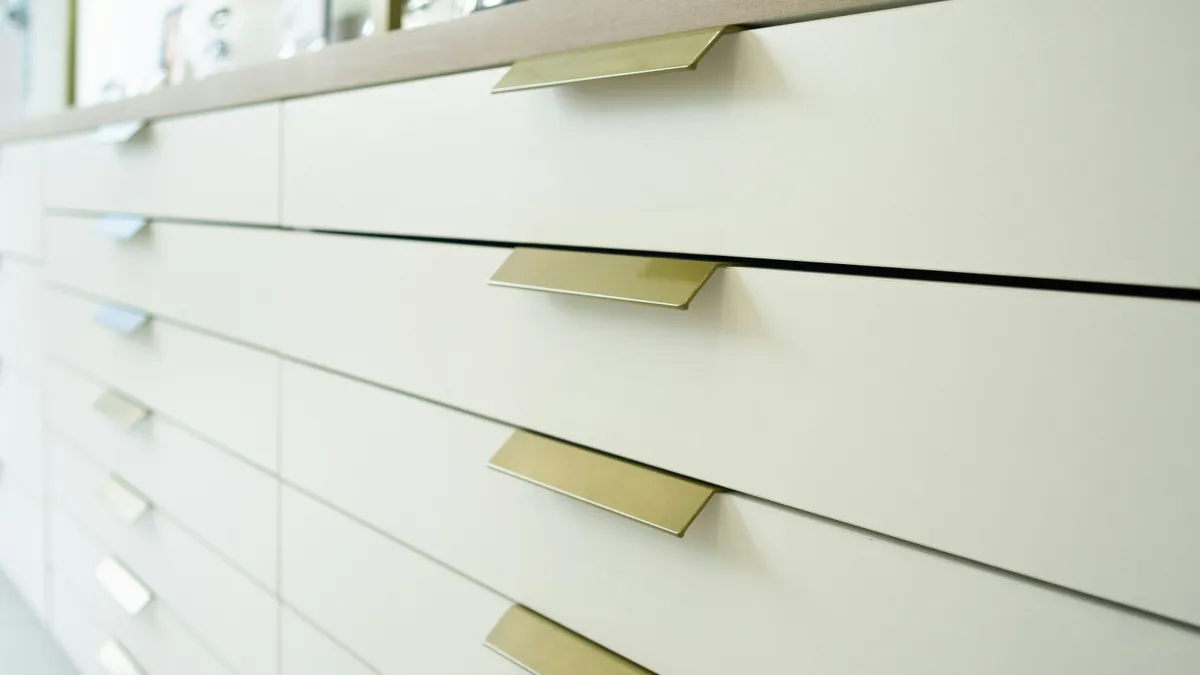
Metal Drawer Systems for Custom Cabinets & Kitchen Storage
Metal drawer systems for custom cabinetry, kitchens, and built-ins. Soft-close, undermount, and heavy-duty slides for precision CNC cabinet fabrication.