Pine Cabinets, Farmhouse Furniture & Rustic Interior Millwork
softwood -- budget tier
- Janka 870 (yellow pine) -- affordable and readily available everywhere
- Knotty pine for rustic character; clear pine for a cleaner look
- The traditional material for country and farmhouse furniture
STEP · STL · IGES · DWG · DXF · PDF · and more
Uploads are secure & confidential
Is Pine Good for Cabinets?
Pine is the most widely available and affordable solid wood material in North America. It grows fast, mills easily, and is stocked at every lumber yard from Maine to California. These practical advantages have made pine the default material for painted furniture, millwork, shelving, and rustic cabinetry across most of American woodworking history.
Pine comes in two broad categories. Knotty pine -- full of character knots and grain variation -- has a warm, rustic look that defines country, farmhouse, and cabin aesthetics. Clear pine -- straight-grained, knot-free -- accepts paint cleanly and is used as a cost-effective substitute for poplar and soft maple in painted cabinetry.
For CNC work, pine machines quickly and cleanly with sharp tooling. Its resin can gum up bits over long runs, so air cooling and regular cleaning are important. Knotty areas require slower feed rates to avoid grain reversal and tearout at the knot interface. Clear pine with proper finishing is a legitimate painted cabinetry material for budget-focused projects.
How OpenSpindle works
We tap our partner network. You get the best-match quote.
Upload your part and we tap our network of partner shops to get you a competitive, all-in quote that is the best match for the job.
One upload
A CAD file or a sketch. That is the whole ask on your end.
Your best-match quote
Sourced from the partner shops set up for your exact part.
All-in, on your timeline
Machining, finishing, and shipping detailed to your turnaround.
Pine Cabinets, Farmhouse Furniture & Rustic Applications
Pine's wide availability, low cost, and easy workability make it the first choice for budget furniture, painted cabinetry, and rustic interior millwork.
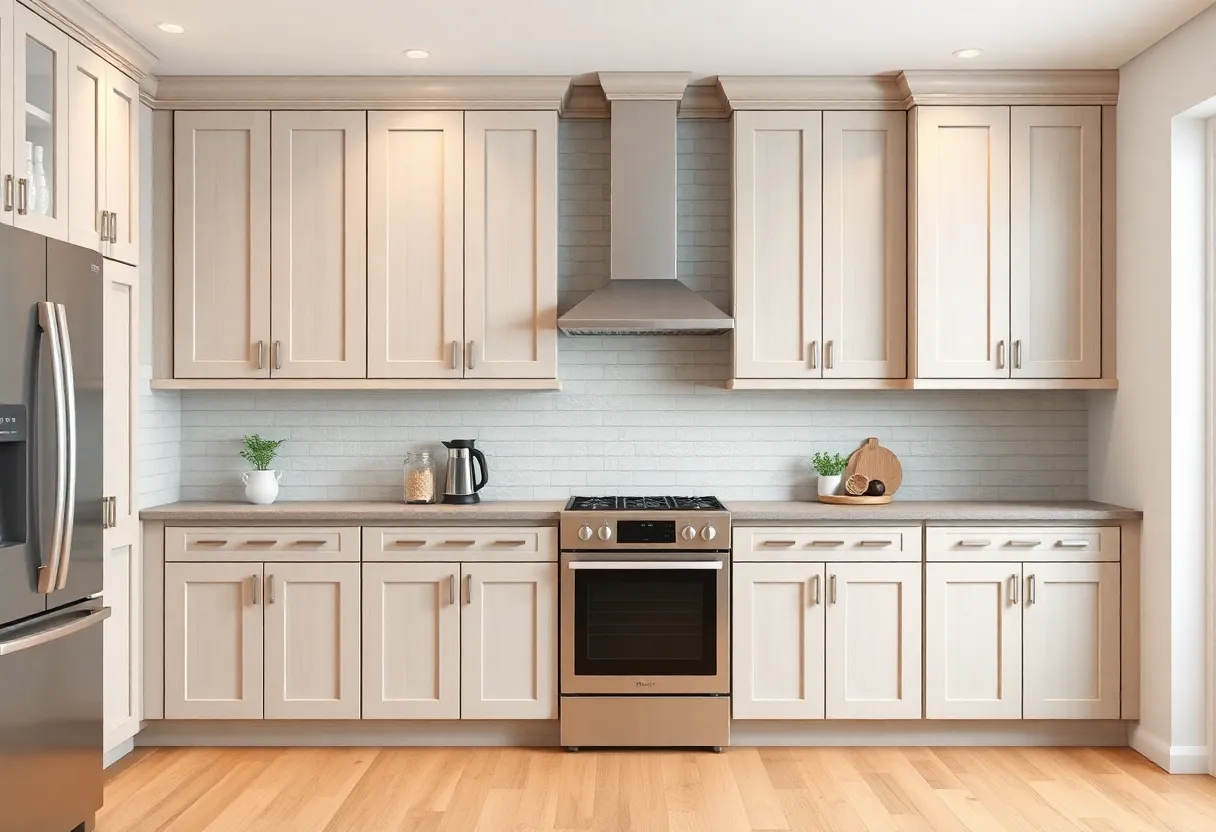
Clear pine is a budget option for painted kitchen and bath cabinetry. With proper grain filling and priming, it can achieve a clean painted result at lower material cost than maple or poplar.
- Shaker and flat-panel door styles work well with clear pine
- Paint-grade face frames and carcasses
- Budget-friendly laundry and utility room cabinetry
Use clear pine, not knotty, for painted cabinetry -- knots bleed through paint without shellac primer
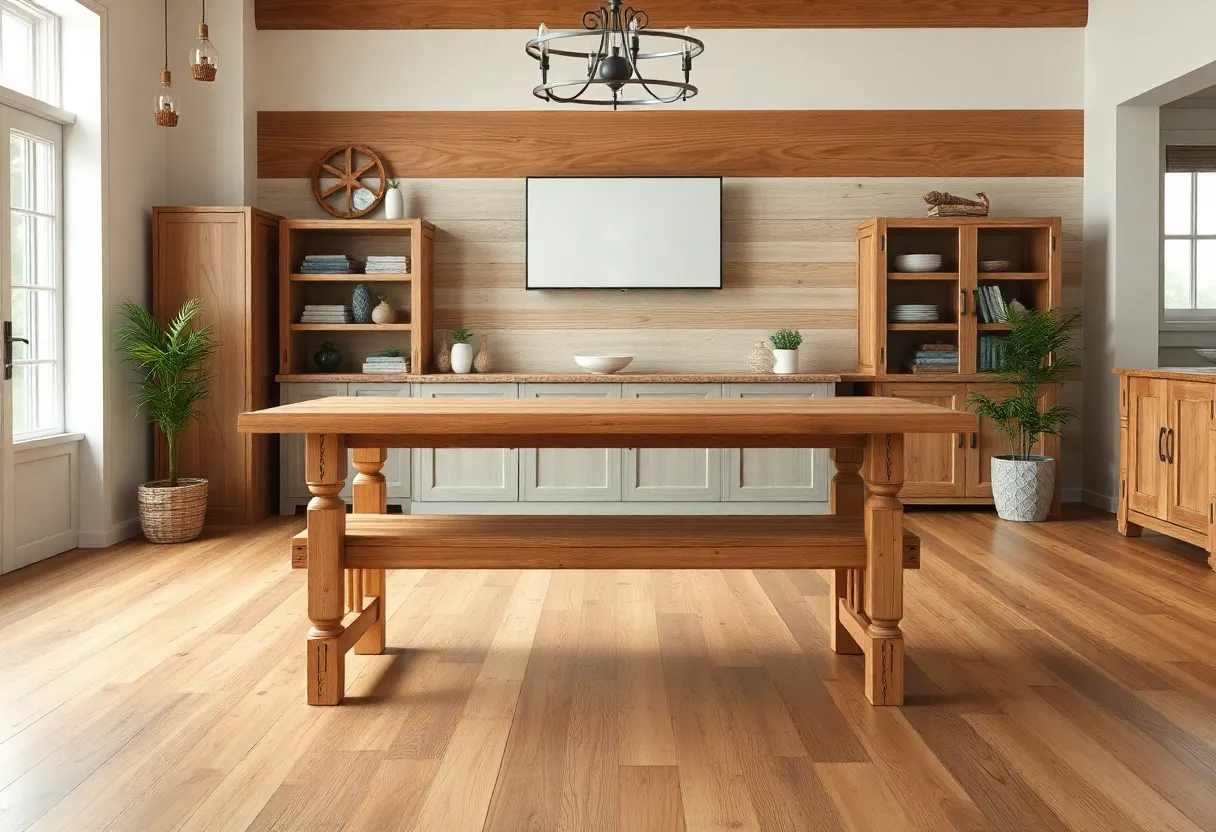
Knotty pine furniture is a defining element of farmhouse, country, and mountain-cabin aesthetics. The natural character marks and grain variation look more hand-crafted than precision-machined.
- Dining tables with knotty pine tops and aprons
- Chunky farmhouse benches and stools
- Rustic bookcases and side tables
Pine furniture looks best with natural oil or a light stain that enhances the grain
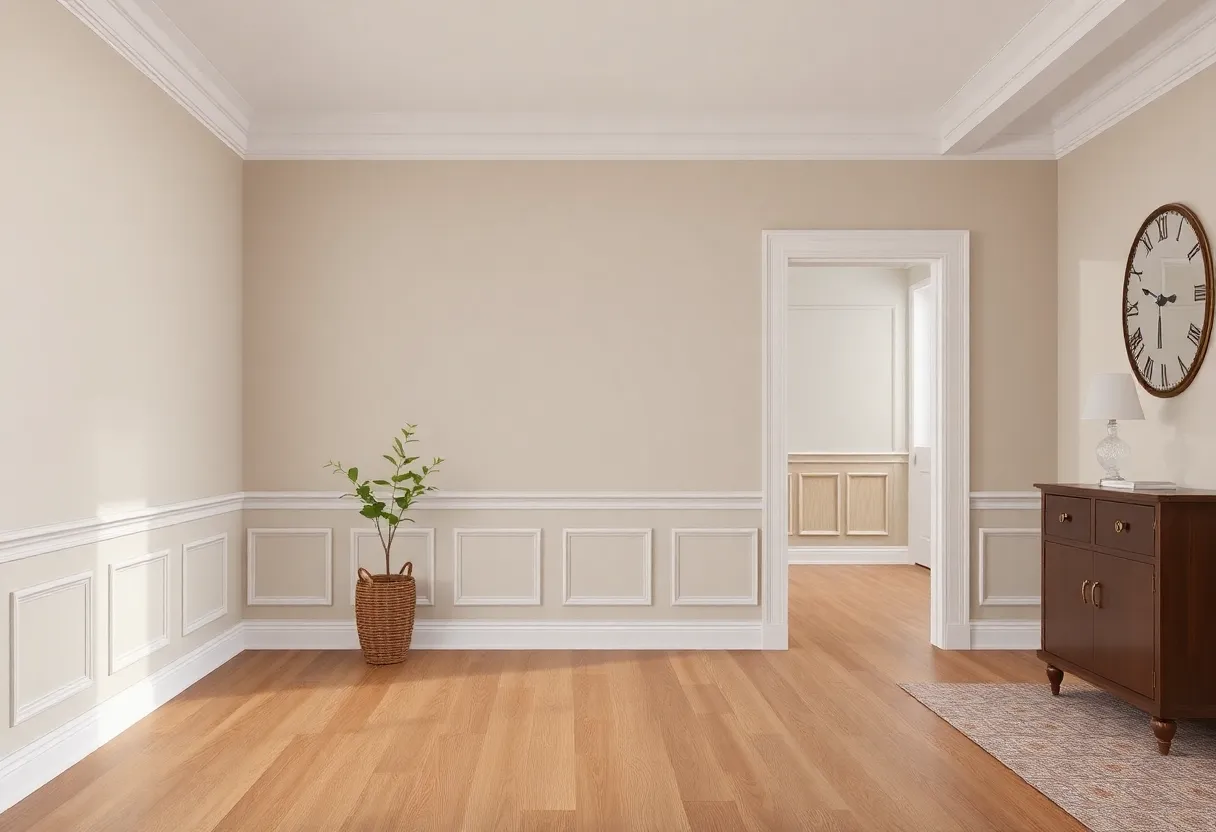
Pine is the traditional material for interior trim -- baseboards, casing, crown molding, and wainscoting. It machines crisp profiles, paints well, and is a fraction of the cost of hardwood alternatives.
- Baseboards and casing in standard and custom profiles
- Crown molding for rooms with painted trim packages
- Wainscoting and board-and-batten wall treatments
Pine millwork should be primed with a stain-blocking primer to prevent knot bleed
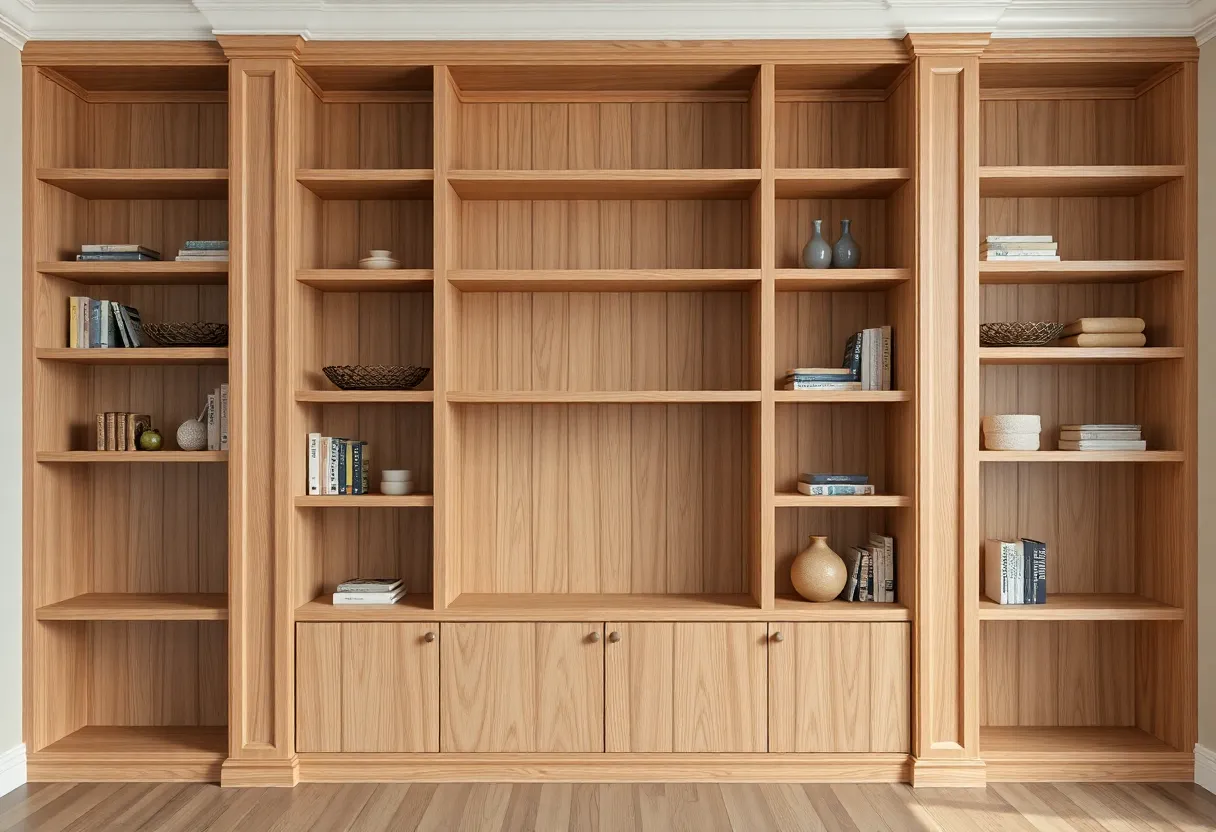
Pine shelving is an accessible entry point into custom built-ins. Clear pine shelves hold reasonable loads with standard thicknesses and take paint or natural finish well.
- Floating shelf systems in natural or painted pine
- Garage and utility storage shelving
- Kids' room and playroom storage
For heavy loads over 30 inches, add a stretcher or thicken the shelf to avoid sag
How Pine Cabinets and Rustic Furniture Are Built
Pine's softness makes it fast to work with and forgiving of imprecise setup. Construction methods are similar to other softwoods.
Solid Pine
Full-thickness solid pine boards for furniture and structural elements. Available in wide widths -- sometimes wider than comparable hardwoods -- which reduces the number of glue joints needed for tabletops and wide shelves.
Best For
- Furniture tops and sides
- Face frames and door profiles
- Millwork and trim
Pine Cabinet and Furniture Pros and Cons
Pine excels in applications where cost, availability, and workability are prioritized over hardness and longevity.
Ideal For
- ✓Budget-conscious projects where solid wood feel matters but cost is paramount
- ✓Painted cabinetry where the wood is infrastructure, not the feature
- ✓Rustic and farmhouse furniture where knotty character is part of the design
- ✓Interior millwork and trim work in painted environments
- ✓Workshop and utility storage where aesthetics are secondary
May Not Be Ideal For
- –High-traffic surfaces that need dent and scratch resistance -- pine is soft
- –Natural-finish premium cabinetry -- pine's grain is not refined enough for the look
- –Humid environments without proper sealing -- pine absorbs moisture readily
- –Precision joinery requiring stable, dense wood
- –Outdoor applications without pressure treatment or appropriate exterior finish
Pine vs Poplar, Alder & MDF for Cabinets and Furniture
Pine competes with poplar and alder for interior wood work, and with MDF and plywood for panel applications.
Pine vs Poplar
- Poplar (Janka 540) is harder than most pine species and more suitable for painted cabinetry
- Poplar takes paint more uniformly -- less grain show-through under primer
- Pine is more widely available and typically slightly less expensive
- Knotty pine has character that poplar does not -- poplar is primarily paint-grade
Choose poplar for paint-grade cabinetry where hardness and finish quality matter; choose pine when budget is the deciding factor or rustic character is desired.
View Poplar →Pine vs Alder
- Alder (Janka 590) is in a similar hardness range to many pine species
- Alder takes stain much more attractively than pine under comparable conditions
- Pine's knotty character has no equivalent in alder
- Alder is more common in the Western US; pine is available everywhere
Choose alder for stain-grade rustic work; choose pine for knotty character or when regional availability favors it.
View Alder →Pine vs MDF
- MDF is more stable dimensionally and takes paint more uniformly than pine
- Pine is a real wood with grain and character; MDF is perfectly flat and uniform
- MDF cannot be used in exposed moisture environments; pine has better moisture handling
- MDF is typically less expensive for flat panel applications
Choose MDF for paint-grade flat panels requiring a perfectly smooth finish; choose pine when solid wood character is part of the design.
View MDF →How Much Do Pine Cabinets and Farmhouse Furniture Cost?
Pine is the most cost-effective solid wood for cabinetry, furniture, and millwork. Its availability at every lumber yard means competitive pricing and short lead times.
Cost Impact by Construction Method
Material Cost
Pine lumber runs $1.50-6 per board foot depending on species and grade. Knotty grades are least expensive; clear pine commands a 40-80% premium over knotty.
Includes
- Knotty pine for rustic character
- Clear pine for paint-grade applications
- Pine plywood for sheet goods
Best For
Budget Kitchen
A clear pine painted kitchen can run $8,000-15,000 installed -- the most cost-effective solid wood option for painted cabinetry.
Includes
- Custom fabrication with clear pine
- Painted finish
- Standard hardware
Best For
Furniture or Millwork Project
Custom pine furniture (dining table, bench, dresser) typically runs $1,200-4,000. Full millwork packages (trim, wainscoting, crown) for a room: $2,000-6,000.
Includes
- Solid pine construction
- Natural oil, stain, or painted finish
- Custom profiles for millwork
Best For
What Actually Drives Pine Cost
- ·Grade -- clear pine costs 40-80% more than knotty pine
- ·Species -- southern yellow pine is harder and more durable than eastern white pine
- ·Finish -- knotty pine stain-grade requires careful knot sealing
- ·Project complexity -- millwork profiles vs. flat panel applications
Key Insight
Pine's low cost means that even with a professional shop's labor rates, custom pine cabinetry can compete with high-end box-store product on total price. The difference is in fit, finish, and the fact that solid pine is real wood.
Finishes & Design Guidance
Pine is the defining wood of farmhouse and rustic interiors -- from knotty cabin built-ins to painted country cabinetry. It spans from characterful and rustic (knotty) to clean and neutral (clear), and neither is better -- they serve different design intentions.
Natural Oil on Knotty Pine
A clear or amber penetrating oil on knotty pine produces the classic country and farmhouse look. The grain, knots, and natural character marks all read clearly under a penetrating finish.
Painted Finish on Clear Pine
Clear pine under a painted finish is close in quality to poplar -- the main difference is slightly more grain texture. A shellac-based primer is required to seal any remaining resin and knots before topcoating.
Stained Pine
Pine accepts stain, but requires careful conditioning to prevent blotching. Gel stains are the most forgiving option. Dark stains on knotty pine produce a rich, aged look that is popular in traditional and rustic interiors.
Pro Tip
When painting knotty pine, every knot needs to be sealed with shellac-based primer (BIN or equivalent) before priming with a standard primer. Without this step, pine resin will bleed through the topcoat within months -- regardless of how many coats you apply over regular primer.
Design Pairings
Hardware
Companion Materials
Design Styles
Frequently Asked Questions
What is pine and what types are used in custom woodworking?
How much does pine lumber cost per board foot?
Is pine durable enough for kitchen cabinets?
What is knotty pine and when should you use it?
Can pine be used for outdoor furniture?
How does pine finish and stain?
What is the difference between Eastern white pine and Southern yellow pine?
Is pine a good choice for floating shelves?
Ready to Get Started?
Tap our network of partner CNC woodworking shops today. Submit your project details and get a competitive, best-match quote from specialists in your area.
Get a Quote