Poplar Cabinets, Painted Built-Ins & Interior Millwork
hardwood -- budget tier
- Janka 540 -- the standard budget hardwood for paint-grade cabinetry
- Lightweight, fast to machine, and takes paint predictably
- The workhorse of production cabinet shops across North America
STEP · STL · IGES · DWG · DXF · PDF · and more
Uploads are secure & confidential
Is Poplar Good for Cabinets?
Poplar is one of the most commonly used paint-grade hardwoods for cabinets and built-ins because it machines cleanly, paints exceptionally well, and remains cost-effective compared to maple.
Poplar is the unglamorous backbone of most custom painted cabinetry produced in North America. It is not a wood people specify by name for its beauty -- they specify it because it is the most cost-effective hardwood for painted applications and it does the job reliably. Cabinet shops across the country use poplar for face frames, door components, and drawer boxes in painted cabinetry because it machines fast, takes paint predictably, and keeps project costs in range.
At Janka 540, poplar is softer than hard maple, soft maple, white oak, and cherry -- but harder than pine and cedar. For painted cabinetry in residential environments, this hardness is adequate. Kitchen cabinets, bathroom vanities, laundry room storage, and closet systems built in poplar will serve their intended function for decades with proper care.
The main limitation of poplar is its green, purple, and gray mineral streaks -- natural color variation that is unattractive under stain. Under paint, these streaks disappear completely, which is why poplar is almost exclusively used for painted applications. It is a material that exists to serve the design goals of paint, not to show itself.
How OpenSpindle works
We tap our partner network. You get the best-match quote.
Upload your part and we tap our network of partner shops to get you a competitive, all-in quote that is the best match for the job.
One upload
A CAD file or a sketch. That is the whole ask on your end.
Your best-match quote
Sourced from the partner shops set up for your exact part.
All-in, on your timeline
Machining, finishing, and shipping detailed to your turnaround.
Poplar Cabinets, Built-Ins & Paint-Grade Applications
Poplar is the most common material for painted custom cabinetry and millwork. Its combination of workability, price, and paint acceptance makes it the practical choice for a wide range of projects.
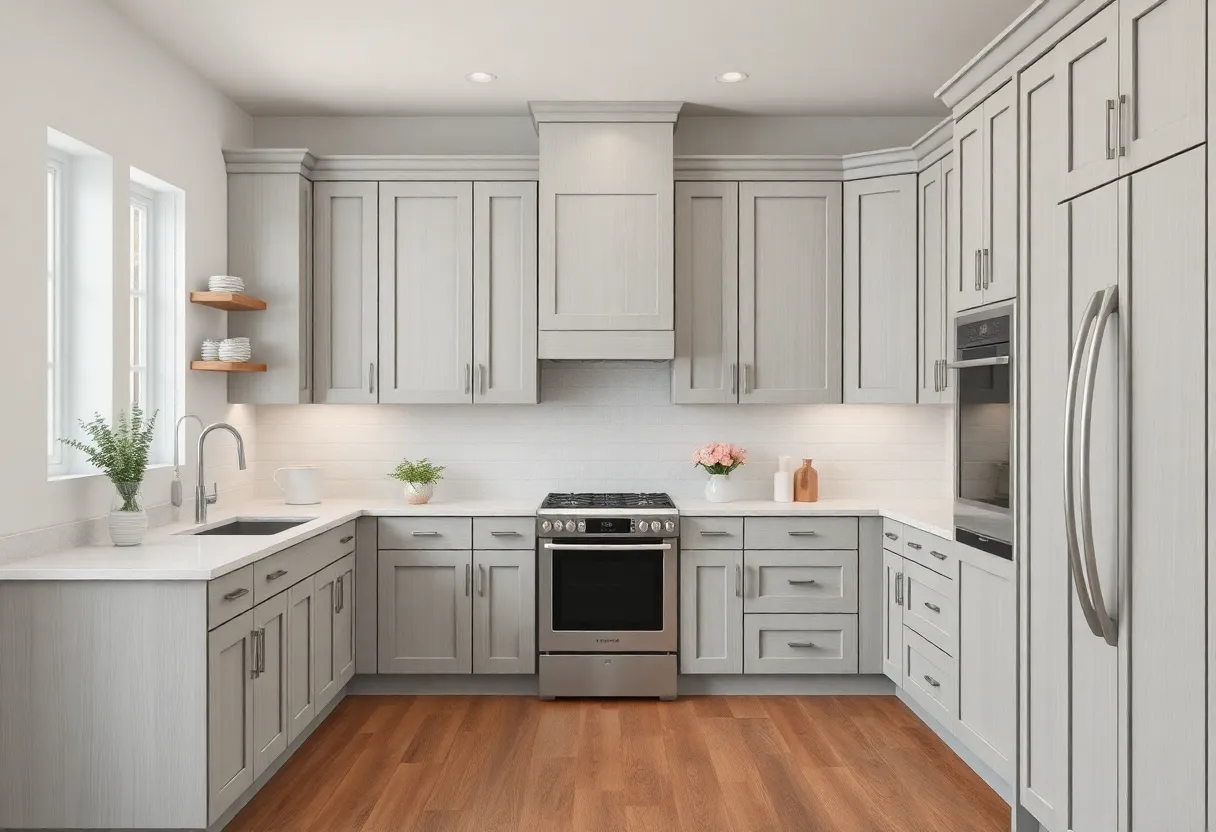
Poplar is the entry point for custom painted kitchen cabinetry. It keeps material cost low without sacrificing the benefits of solid wood -- no VOC emissions, real joinery, and the ability to be refinished.
- Full custom face-frame and frameless construction
- Shaker, flat, and traditional painted door styles
- Integrated drawer boxes and rollout shelves
Never stain poplar -- its mineral streaks show prominently under stain

Painted poplar built-ins create the look of a high-end, architect-designed interior at a cost that makes whole-room installations feasible.
- Floor-to-ceiling bookcase systems with crown and base
- Mudroom lockers and bench storage
- Office and entertainment built-ins
Poplar built-ins painted in a trim color create seamless architectural integration
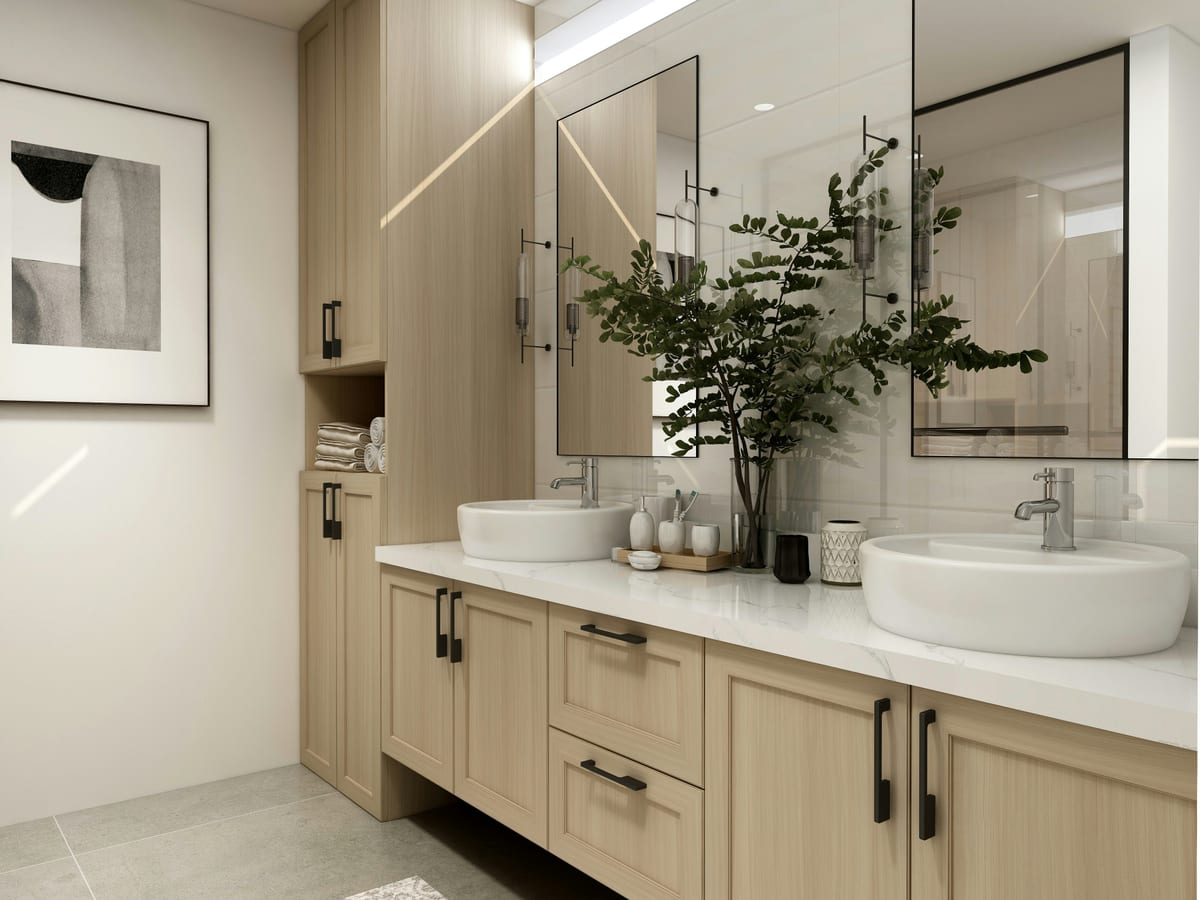
Custom painted poplar vanities cost significantly less than hardwood alternatives while offering the same custom fit and finish options. Proper sealing is required for moisture management.
- Standard and custom vanity sizes to fit any layout
- Painted or glazed door and drawer fronts
- Linen storage and integrated medicine cabinets
Catalyzed lacquer or conversion varnish recommended for bath environments
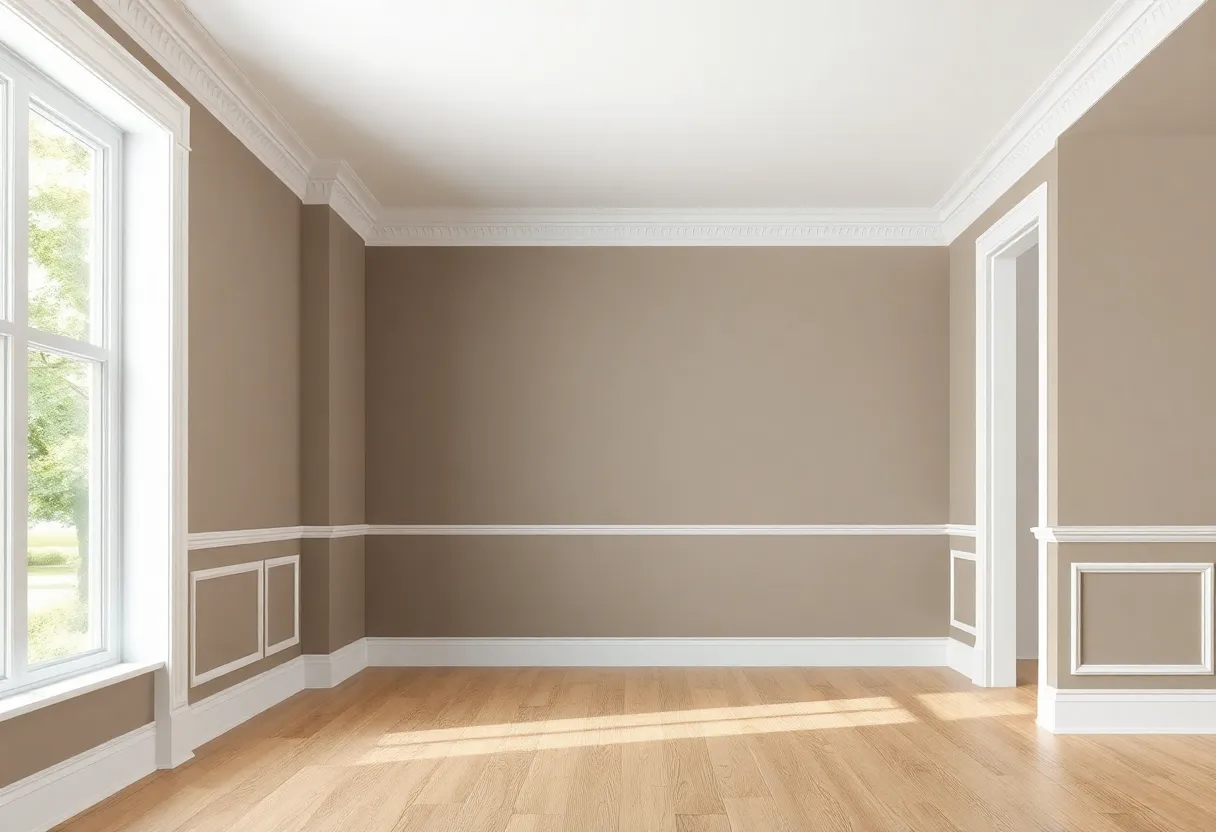
Poplar is the preferred species for painted interior millwork. It machines crisp profiles, holds paint well, and is the right balance of cost and quality for baseboards, casings, and trim.
- Baseboards and door/window casing profiles
- Wainscoting and panel mold details
- Built-up crown molding with multiple poplar components
Poplar millwork is a step up from MDF trim in durability and nail-holding ability
How Poplar Cabinets and Built-Ins Are Constructed
Poplar's ease of machining and light weight make it fast and efficient to work with in any construction format.
Solid Poplar
Full-thickness poplar boards for face frames, door profiles, and visible structural elements. Poplar's light weight makes it easy to handle in production settings -- lighter than maple or oak by a significant margin.
Best For
- Face frames and door profiles
- Millwork and trim
- Lightweight furniture frames
Poplar Cabinet Pros and Cons
Poplar is the most practical choice for painted interior cabinetry and millwork. Its limitations are well-understood and rarely matter in its intended applications.
Ideal For
- ✓Any painted interior cabinetry application
- ✓Interior millwork and trim in painted environments
- ✓Budget-conscious projects where the finish is paint, not natural wood
- ✓High-volume production painted cabinetry
- ✓Secondary spaces (laundry, garage, utility) where cost must be controlled
May Not Be Ideal For
- –Stain-grade applications -- poplar's mineral streaks are visible and unattractive under stain
- –High-impact surfaces requiring hardwood density
- –Natural-finish furniture where grain character is important
- –Outdoor applications -- poplar has poor weather resistance
- –Applications where dent resistance is critical
Poplar vs Maple and MDF for Painted Cabinetry
Poplar is one of three primary options for painted cabinetry. Here is how it compares to the two most common alternatives.
Poplar vs Soft Maple
- Soft maple (Janka 950) is nearly twice as hard as poplar -- noticeably more durable
- Both take paint similarly -- maple's tighter grain gives a marginally smoother result
- Soft maple is typically 25-40% more expensive per board foot
- Poplar is lighter and faster to machine -- better for high-volume production
Choose soft maple when durability is important and the modest cost increase is justified; choose poplar for maximum cost efficiency on painted projects.
View Soft Maple →Poplar vs Pine
- Pine has knotty grades with character; poplar is uniform and better for paint-grade
- Poplar holds paint more uniformly than most pine species
- Both are similarly priced -- pine can be slightly less expensive
- Pine's resin requires shellac primer; poplar does not
Choose poplar for painted cabinetry and millwork; choose pine for rustic character work or when availability drives the decision.
View Pine →Poplar vs MDF
- MDF is flatter and produces a smoother painted surface than poplar
- Poplar is real wood -- better nail-holding, more moisture tolerant, and refinishable
- MDF is typically 30-50% less expensive than solid poplar per board foot equivalent
- Poplar can be used for structural elements where MDF would fail
Use MDF for flat painted panels; use poplar for profiled, structural, and edge-exposed elements where real wood is needed.
View MDF →How Much Do Poplar Cabinets and Built-Ins Cost?
Poplar is one of the most cost-effective hardwoods for painted cabinetry and built-ins, offering a strong balance of durability, machinability, and finish quality.
Cost Impact by Construction Method
Material Cost
Poplar lumber runs $3-6 per board foot for select grades. It is widely available throughout North America with short lead times.
Includes
- Select paint-grade boards
- Standard dimensional lumber
- Pre-cut door stock
Best For
Budget Kitchen
A custom poplar painted kitchen runs $9,000-16,000 installed -- making fully custom cabinetry competitive with high-end semi-custom alternatives.
Includes
- Custom fabrication
- Painted finish
- Standard hardware
Best For
Full Scope Project
A full home cabinetry scope (kitchen, baths, built-ins) in poplar typically runs $18,000-35,000 -- significantly less than equivalent maple or white oak projects.
Includes
- Full home cabinetry scope
- Consistent painted finish
- Standard to upgraded hardware
Best For
What Actually Drives Poplar Cost
- ·Paint system quality -- basic primer + topcoat vs. furniture-grade multi-step
- ·Door style -- flat panel vs. 5-piece profile
- ·Project scope -- larger projects lower per-unit labor cost
- ·Hardware -- poplar's budget nature does not limit hardware quality
Key Insight
The most common buyer mistake with poplar is choosing it for cost and then spending the savings on elaborate hardware or countertops. That trade-off is valid -- the finished kitchen can look exceptional if the design is strong. Poplar is infrastructure; the design drives the result.
Finishes & Design Guidance
Poplar is primarily used for painted cabinetry and interior millwork because of its smooth grain and consistent surface quality. Its aesthetic contribution is entirely about what it enables, not what it looks like. Under paint, it is invisible -- the design lives in the paint color, hardware, door profile, and countertop.
Painted in Any Color
Poplar's primary purpose is to serve as a substrate for painted finishes. It takes primer uniformly, produces an acceptably smooth surface, and allows any paint color to read true.
White and Off-White Paints
White and near-white painted cabinetry is the single most popular painted cabinet finish. Poplar's neutral color under primer means it reads true white without color interference from the wood.
Bold and Dark Colors
Navy, forest green, black, and other bold colors are increasingly popular for cabinetry. Poplar handles dark paint colors as well as any other species -- the wood does not affect the color outcome.
Pro Tip
For the best painted result on poplar, sand the door faces to 180 grit before finishing -- any machine marks from the router will show through a gloss topcoat if not sanded out. The extra ten minutes per door is the difference between a professional result and an amateurish one.
Design Pairings
Hardware
Countertops
Design Styles
Frequently Asked Questions
What is poplar wood and what is it typically used for?
How much does poplar cost compared to other hardwoods?
Is poplar good for painted kitchen cabinets?
How hard is poplar compared to other cabinet woods?
Can poplar be stained for a natural wood look?
What is poplar used for in cabinet construction?
How does poplar compare to MDF for painted cabinetry?
Is poplar a sustainable wood choice?
Ready to Get Started?
Tap our network of partner CNC woodworking shops today. Submit your project details and get a competitive, best-match quote from specialists in your area.
Get a Quote