New Product Introduction
Design for Manufacturing: Why Startups Should Think About the Factory Before the First Prototype
The short answer
Design for Manufacturing is the practice of designing a product with the capabilities, limitations and economics of manufacturing in mind. For startups, it is not a step to take after the prototype works. It belongs at the beginning, when the choice of geometry, tolerances, materials and processes is still cheap to change. The earlier manufacturing is involved, the fewer expensive redesigns you pay for and the faster you get to a shippable product.
The hidden cost of ignoring DFM
Too often, early-stage companies focus almost entirely on what a product should do and how it should look. They invest in CAD, build an impressive prototype, and prepare for launch — only to discover that the design is expensive or difficult to manufacture. By then, the decisions that created those problems are already embedded in the product.
Imagine a startup developing a new piece of hardware. The engineering team designs a component with complex internal features, unusually tight tolerances, and several custom parts that require different manufacturing processes. The first prototype works. The team is excited. Then the manufacturing quotes arrive.
A part that looked simple in CAD requires specialized tooling, multiple machine setups, or expensive five-axis machining. Another component needs to be redesigned because the selected material isn't available in the required form. A third needs an entirely different fastening approach. Suddenly, the startup is spending weeks and thousands of dollars correcting decisions that could have been addressed earlier.
These costs compound in several ways:
Higher prototype costs. Complex geometry, difficult setups, and unnecessary precision increase the cost of each iteration.
Longer development cycles. Parts that are difficult to manufacture take longer to quote, produce, inspect and revise.
Expensive redesigns. Changing a design after tooling, testing or assembly has begun can require repeating work.
Slower time to market. Every manufacturing problem creates another delay between product development and customer delivery.
For a startup operating with limited capital and a narrow launch window, these aren't minor inconveniences. They can determine how many iterations the company can afford before launch.
Your CAD model is also a manufacturing plan
A CAD model describes the geometry of a part. It doesn't automatically describe the easiest or most economical way to produce it.
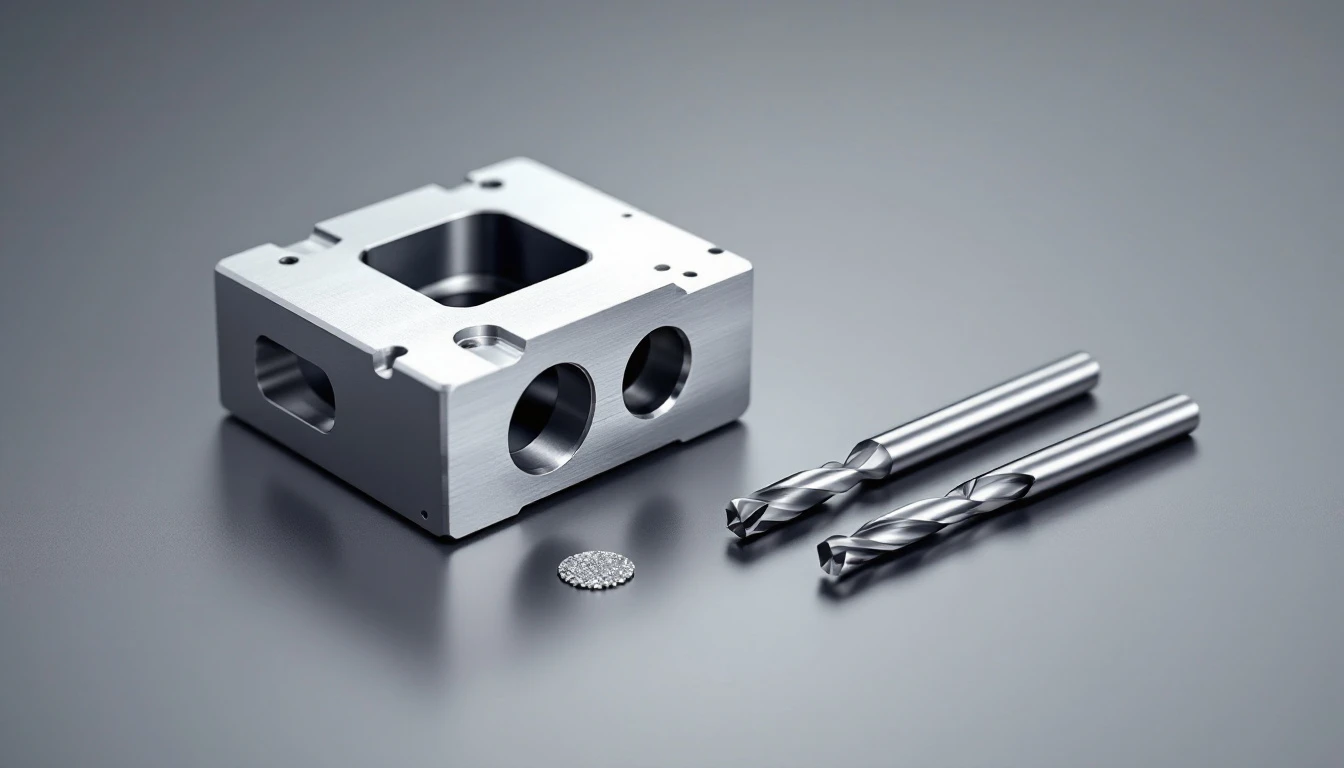
Consider a simple aluminum bracket. A designer could create it as a complex machined component with multiple setups, or redesign it as a sheet-metal part that can be laser cut and bent. Both designs might perform the same function. But the manufacturing processes, equipment, material usage, and costs could be dramatically different.
Good DFM starts by asking questions such as:
- Can this part be made using standard three-axis CNC equipment?
- Could sheet metal, extrusion, casting or additive manufacturing accomplish the same function?
- Are all of these tolerances actually necessary?
- Can several components be consolidated, or would separating them simplify manufacturing?
- Are standard fasteners and readily available materials suitable?
The answers influence not only manufacturing costs but also reliability, assembly time, and future scalability. The arithmetic for deciding which dimensions earn a tight tolerance is in tolerance stack-up.
DFM matters most when you're building the first 10 to 100 units
Startups frequently operate between prototyping and mass production. They might need five engineering prototypes, 25 beta units, or 100 products for an initial customer launch. This is a challenging production range.
The quantities are too small to justify many traditional high-volume tooling investments, but large enough that individually hand-building every unit becomes expensive and inconsistent. The design needs to work with manufacturing processes that are economical at low volumes while leaving room for future production.
That may mean CNC machining a component today and revisiting casting or injection molding after demand is proven. It may mean using standard aluminum stock rather than developing a custom extrusion. See which manufacturing process at what volume for the crossover math.
The key is to design for the production stage you're actually in, not the production stage you hope to reach someday.
Involve manufacturing early
The point of DFM isn't to design a worse product. It's to design a product whose function survives contact with the way real parts get made. A designer who talks to a shop before the geometry freezes learns things a CAD tool cannot teach: which cutter the shop actually runs, what stock sizes it keeps, which finishes it does in-house, and which small changes would drop the price of the part by half.
That conversation is easier to have when you can reach more than one shop. The right partner for the first 10 prototypes is often not the right partner for the first 500 units, and the right partner for aluminum brackets is not the right partner for sheet metal enclosures.