Materials
Stainless vs Aluminum: How to Choose
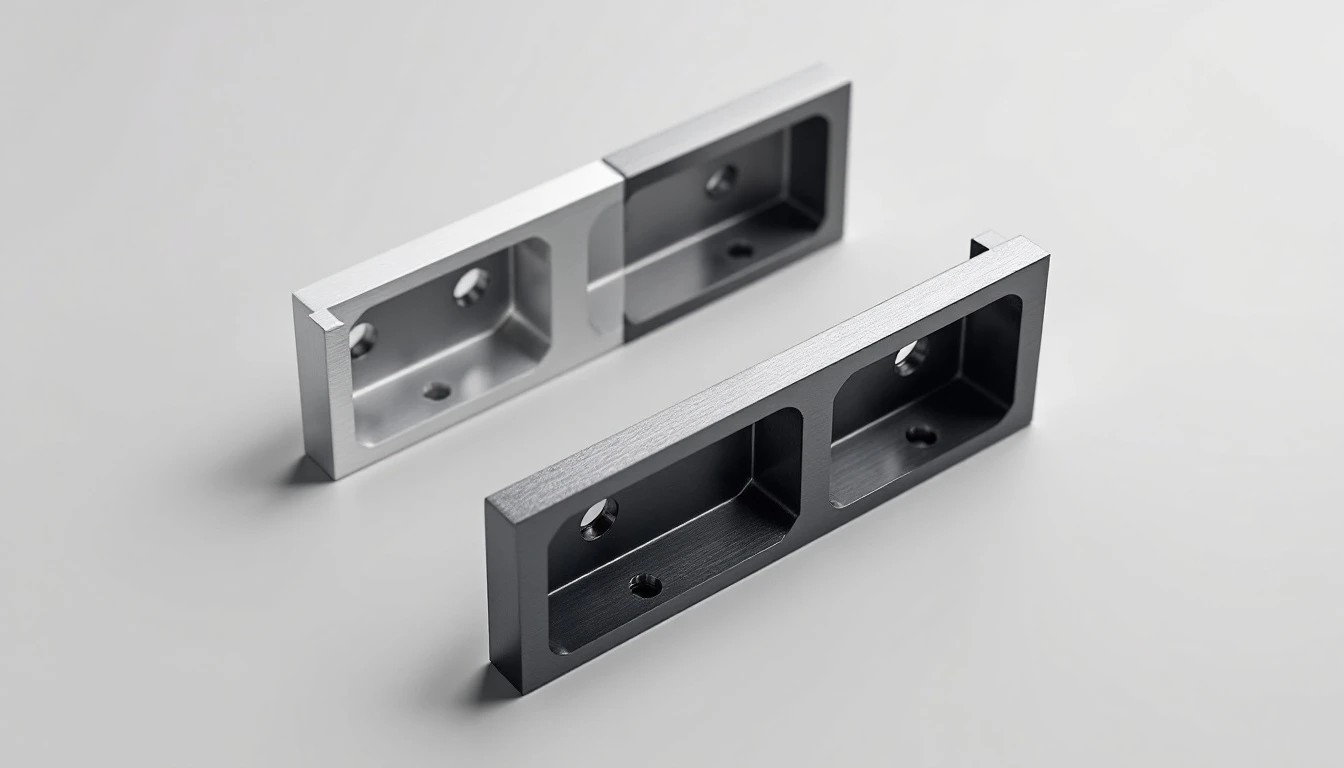
The short answer
Aluminum is about a third the density of stainless steel and machines several times faster, which is why the same part usually costs less in aluminum and weighs far less. Stainless is roughly three times stiffer, harder wearing, and holds strength at temperatures aluminum does not. Choose aluminum when weight, cost and machining time matter and the part is not wearing or running hot. Choose stainless when the part is structural, sliding, sterile, or sitting in a corrosive environment where a coating would become a liability.
Property comparison
The comparison below uses the grades you will be quoted: 6061-T6 and 7075-T6 for aluminum, 304 and 316 for stainless. Annealed stainless is weaker than most people assume, and 7075 aluminum is stronger, which is why the strength column alone leads people to the wrong conclusion.
| Property | 6061-T6 | 7075-T6 | 304 stainless | 316 stainless |
|---|---|---|---|---|
| Density | 2.70 g/cc | 2.81 g/cc | 8.00 g/cc | 8.00 g/cc |
| Yield strength | 276 MPa | 503 MPa | About 215 MPa | About 205 MPa |
| Tensile strength | 310 MPa | 572 MPa | About 505 MPa | About 515 MPa |
| Elastic modulus | 69 GPa | 72 GPa | 193 GPa | 193 GPa |
| Specific strength (yield / density) | 102 | 179 | 27 | 26 |
| Thermal conductivity | 167 W/mK | 130 W/mK | 16 W/mK | 16 W/mK |
| Max service temperature | About 150 C | About 130 C | About 870 C | About 870 C |
| Relative machining time | Baseline | Similar to 6061 | 3 to 5x | 3 to 5x |
| Corrosion resistance bare | Good, self oxidizing | Fair | Very good | Excellent in chlorides |
The stiffness point people get wrong
Stainless is about 2.8 times stiffer than aluminum by elastic modulus, and that number is real. What it does not mean is that an aluminum part deflects 2.8 times more.
Stiffness of a part depends on geometry as well as material, and bending stiffness scales with the cube of thickness. Because aluminum is a third the density, you can make a section roughly 1.4 times thicker at the same weight, and that thickness increase recovers most of the modulus difference. This is why aircraft are aluminum and why an aluminum bracket at equal weight is often stiffer, not weaker.
Where the modulus difference genuinely bites is when you cannot change the geometry. A thin panel constrained to a fixed thickness, a shaft constrained to fit an existing bore, a flange with a fixed envelope: in those cases aluminum deflects more and there is nothing to do about it.
So the question is not which material is stiffer. It is whether you control the section.
Machining time is where the money is
On a machined part, material cost is usually a minority of the price and cycle time is the majority. Aluminum cuts at three to five times the material removal rate of stainless, and that ratio flows almost directly into the quote.
Stainless is slow for specific reasons. It work hardens, so a tool that rubs rather than cuts creates a hardened layer that wrecks the following pass. It has poor thermal conductivity, so heat stays at the cutting edge instead of leaving in the chip, which is what shortens tool life. And it is gummy, producing stringy chips that need managing.
The practical consequence: a part that quotes at a certain price in 6061 will often quote at two to four times that in 304, and almost none of the difference is the metal. If a quote comes back higher than you expected on a stainless part, the cycle time is where to look, not the material line.
Corrosion without a coating, and what anodizing changes
Bare aluminum forms its own oxide layer and resists general atmospheric corrosion reasonably well, but it is soft, it stains, and it pits in salt. Anodizing thickens that oxide deliberately, giving a hard, corrosion resistant, colorable surface. Type II is the general purpose decorative and protective process; Type III, hard anodize, produces a much harder surface for wear applications.
Stainless needs no coating. That is its quiet advantage, and it matters more than it first appears. A coating is a thing that can be scratched, chipped, masked incorrectly, or worn through, and every one of those creates a corrosion site. On a part that will be handled, cleaned aggressively, or worn against something, an uncoated stainless part avoids a whole failure mode.
Two practical notes. Anodizing adds thickness, typically 5 to 25 microns per surface for Type II and up to 50 for Type III, and half of it grows outward, so tight fits need masking or allowance. And anodized surfaces are electrically insulating, which catches people out on grounding paths.
Temperature, wear and galling
Aluminum loses strength quickly with heat. By 150 C a 6061 part has given up a substantial fraction of its room temperature yield strength, and 7075 is worse. Anything near a motor, a heater, an engine or a sustained high current path needs checking against temperature rather than assumed.
Stainless holds up to several hundred degrees comfortably. It also has far lower thermal conductivity, which cuts both ways: it is a poor heat sink, and a good thermal break.
Wear is the other axis. Bare aluminum is soft and wears quickly at any sliding interface; hard anodize helps considerably. Stainless resists wear better but has a specific failure mode worth knowing: austenitic stainless galls, meaning two stainless surfaces sliding under load can cold weld and seize. This is why stainless fasteners seize in stainless threads. The fixes are a dissimilar material at the interface, a lubricant or anti seize, or a hard coating.
Choosing by what the part does
Most selections resolve quickly once you name the job the part is doing rather than comparing datasheets.
| What the part does | Choose | Why |
|---|---|---|
| Structural bracket, weight sensitive | Aluminum | Better specific strength; thicken the section to recover stiffness |
| Structural, fixed thin section | Stainless | Modulus wins when you cannot change the geometry |
| Enclosure or chassis | Aluminum | Lighter, cheaper to machine, anodizes well |
| Marine or salt exposure | 316 stainless | No coating to breach; molybdenum resists chlorides |
| Food, medical or sterile washdown | 316L stainless | Uncoated, cleanable, survives aggressive chemistry |
| Sliding or wearing surface | Stainless, or hard anodized aluminum | Bare aluminum wears fast; watch stainless galling |
| Heat sink or thermal path | Aluminum | Ten times the thermal conductivity |
| Above about 150 C | Stainless | Aluminum loses strength well before this |
| High volume, cost driven, benign environment | Aluminum | Machining time dominates and aluminum cuts far faster |
What this costs you
The visible cost is the quote, and on a machined part stainless commonly lands at two to four times the aluminum price for the same geometry, driven by cycle time rather than material.
The less visible costs run the other way. Aluminum usually needs a finish, and anodizing adds process steps, lead time, masking requirements and dimensional growth to manage. Stainless often ships bare, or with a passivation step that is cheap and fast. On a part with complex masking requirements the finishing cost can close a meaningful part of the gap.
Weight has a cost too, and whether it appears on your budget depends on the product. On anything that ships in volume, flies, or gets carried, the mass difference is a recurring cost that a one time material saving does not offset.
The expensive mistake in both directions is the same: specifying a material for a property the part does not need, then paying for it on every unit for the life of the product.
What to send, and what to ask
Send the model along with three things the geometry cannot tell a shop: the service environment, the operating temperature range, and whether any surface slides against another. Those three decide most material questions and almost never appear on the drawing.
Say whether the envelope is fixed. If the section thickness can grow, aluminum is in play on parts where the modulus comparison suggests it is not.
Then ask three questions. What is this part in each material, quoted side by side, so the machining time difference is visible rather than assumed? If we go aluminum, what does the finish add in cost and lead time, and where does the anodize thickness need allowance? And is there a feature here driving the cycle time that matters more than the material choice does?