 Made on OpenSpindle
Resin (SLA / DLP) partMade on OpenSpindle
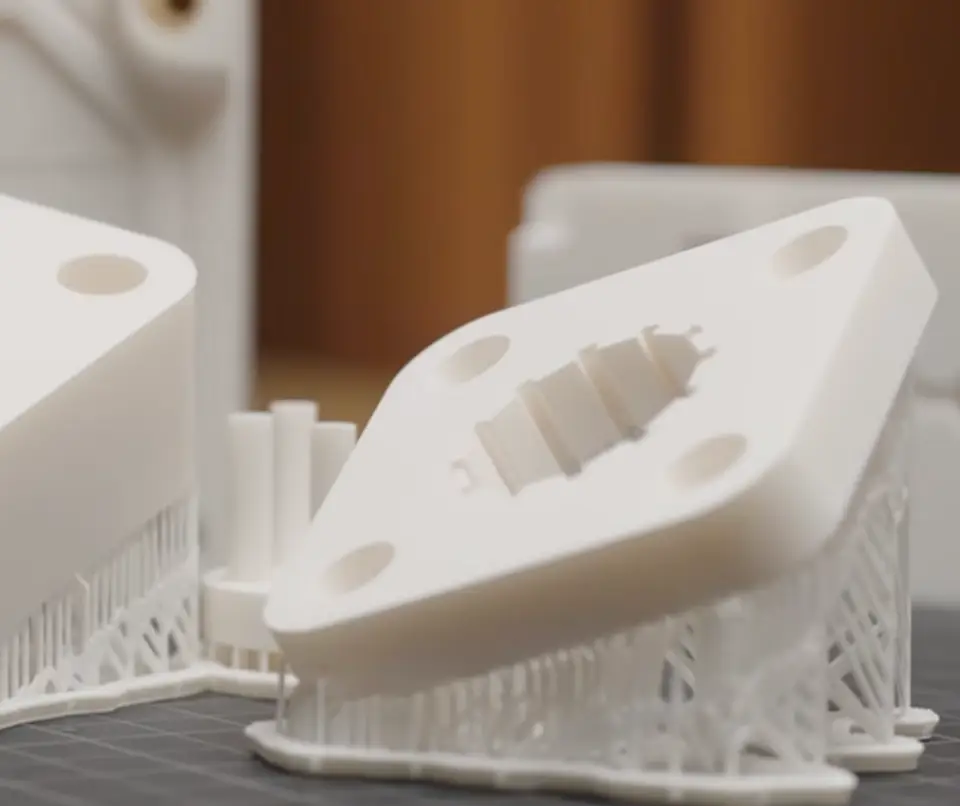
SLA and DLP cure liquid photopolymer with light, layer by layer, for the smoothest surfaces and the finest detail in additive. Best when finish and feature resolution matter: cosmetic models, master patterns, and precise small parts. Resins range from standard and tough to high-temp, rigid, flexible, and castable. Upload your model and we'll send you one matched quote from a qualified manufacturing partner.
STEP · STL · IGES · DWG · DXF · SLDPRT · and more
No CAD file? Describe your project instead
Made on OpenSpindleResin 3D printing (SLA and DLP) is an additive process that cures liquid photopolymer with a laser or projected light, layer by layer. It gives the smoothest surfaces and finest detail of the common printing processes, suited to cosmetic models, master patterns, and precise small parts. Typical tolerance is ±0.2% (min ±0.15 mm), and parts need supports and a post-cure.
Last reviewed
Send a part and get a real price. Nothing to commit to, no cost to ask.
One lead from quote to delivery who has sourced it before.
NDA on request. Files shared only with matched shops.

A CAD file or a sketch. Free quote in about 24 hours.
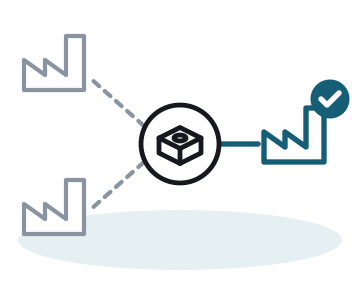
The best-fit shop from our network makes it, on your timeline.

Inspected, shipped and tracked in your inbox.
Resin resolves finer detail than any other common additive process, but parts need supports and a post-cure. Design around both.
| Design rule | Typical spec | Why |
|---|---|---|
| Typical tolerance | ±0.2% (min ±0.15 mm) | Post-cured; fine on small parts, drifts on large ones. |
| Min wall thickness | 0.4 to 0.6 mm | Thinner walls flex, warp, or peel during the build. |
| Min feature / detail | 0.2 to 0.3 mm | Resin holds the crispest embossed and engraved detail. |
| Support material | required | Overhangs and islands need supports that leave small witness marks. |
| Drain / vent holes (hollow parts) | ≥ 3.5 mm | Let uncured resin drain out of enclosed volumes. |
| Clearance for fits | 0.3 to 0.5 mm | Tighter gaps bond mating parts during cure. |
Typical values from resin datasheets; a shop confirms against its printer and resin.
The shop picks the method from your CAD, and the quote tells you which.
Resin is the go-to wherever surface finish, fine detail, or castable patterns matter.
When another process fits better than SLA or DLP resin.
| Process | Best for | Typical volume | Choose it over Resin 3D Printing when |
|---|---|---|---|
| FDM / FFF | Cheap, rugged, large parts | Prototype to low volume | You want the lowest cost or a large part and can accept visible layer lines. |
| SLS | Strong nylon parts, no supports | Low-volume production | You need tough, near-isotropic functional parts rather than fine cosmetic detail. |
| MJF | Production nylon, fine features | Low-volume production | You want durable production nylon parts with good detail and faster batches. |
| CNC Machining | Tight tolerance, engineering materials | Prototype to production | You need tighter tolerances or full engineering-grade material properties. |
Upload a model and we'll source quotes from qualified manufacturing partners.
STEP · STL · IGES · DWG · DXF · SLDPRT · and more
No CAD file? Describe your project instead
Resin 3D printing (SLA and DLP) cures liquid photopolymer with a laser or projected light, layer by layer. It produces the smoothest surfaces and the finest detail of the common additive processes, which makes it ideal for cosmetic parts, master patterns, and precise small components.
Both cure photopolymer resin with light. SLA traces each layer with a laser point, while DLP flashes a whole layer at once with a projector, which is usually faster. Both hit similar detail and finish; the resin choice matters more than the machine for most parts.
Standard for cosmetic models, tough (ABS-like) for snap-fits and housings, durable (PP-like) for wear parts, high-temp for heat-resistant fixtures and mold masters, rigid (glass-filled) for stiff thin-wall parts, flexible for grips and cushioning, and castable for investment-casting patterns.
Typical resin tolerance is about +/- 0.2% of the dimension, with a minimum near +/- 0.15 mm. It is tighter than FDM and holds fine features well; call out critical dimensions so the shop can confirm and orient the part accordingly.
It depends on the resin. Standard resin is rigid but brittle and can degrade under prolonged UV, while tough and durable resins behave more like ABS or polypropylene. For load-bearing functional parts, name the loads and the environment so the shop recommends the right resin, or consider SLS or MJF nylon.
Comparing manufacturing services? See Xometry alternatives