UHMW machining for custom parts
UHMW polyethylene is the slick, abrasion-resistant plastic behind wear strips, chain guides, chute liners, and bushings. It cannot be injection molded in the usual way, so most custom UHMW parts are machined, routed, or waterjet cut from sheet and rod. Upload your drawing and we'll source quotes from shops that machine it.
STEP · STL · IGES · DWG · DXF · SLDPRT · and more
No CAD file? Describe your project instead
What is UHMW?
UHMW (ultra-high-molecular-weight polyethylene, UHMW-PE) is a polyethylene with molecular chains many times longer than ordinary HDPE. That gives it very low friction, very high abrasion and impact resistance, and almost no moisture absorption. It is made into sheet and rod by compression molding or ram extrusion, then machined into wear strips, guides, liners, and bushings.
Last reviewed
Why work with OpenSpindle
No-obligation quote
Send a part and get a real price. Nothing to commit to, no cost to ask.
A person to talk to
One lead from quote to delivery who has sourced it before.
Your files stay private
NDA on request. Files shared only with matched shops.
Which UHMW grade should I use?
Most jobs run virgin natural UHMW. The other grades trade a property for cost, UV life, friction, or static control. If yours is not here, ask when you request a quote.
Virgin UHMW (natural)
White, unfilled UHMW made from new resin. The best abrasion, impact, and chemical resistance of the family, and the grade most often specified for food contact when made to an FDA-compliant resin.
Best for Wear strips, food processing parts, general wear service
Reprocessed UHMW
Made with reground material, usually black or green. Lower cost, with lower and less consistent wear properties than virgin. Fine for liners and bumpers where appearance and peak wear life matter less.
Best for Chute and truck bed liners, dock bumpers, budget wear parts
UV-stabilized UHMW
Pigmented (often black) with additives that slow sunlight degradation. Natural UHMW chalks and embrittles outdoors over time; this grade lasts longer in exposed service.
Best for Marine fender pads, outdoor guides, dock hardware
Self-lubricating (oil or MoS2 filled)
Filled to lower friction further and reduce stick-slip on slides. Useful where a guide runs dry against steel or product.
Best for Slides, chain guides, high-cycle sliding surfaces
Antistatic / conductive
Carbon-filled, usually black, to dissipate static so powders and bulk material do not cling. Specify the surface resistivity you need.
Best for Bulk handling, powder chutes, electronics handling
How UHMW parts are made
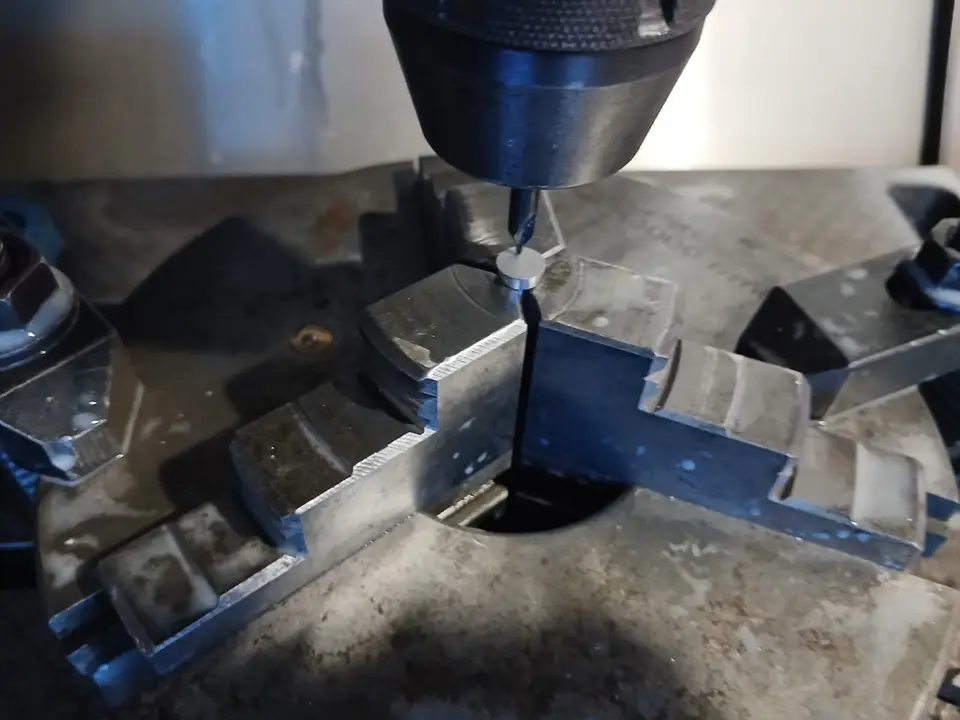
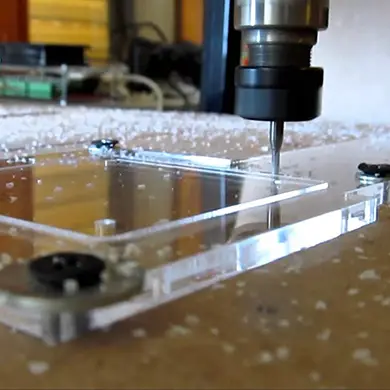
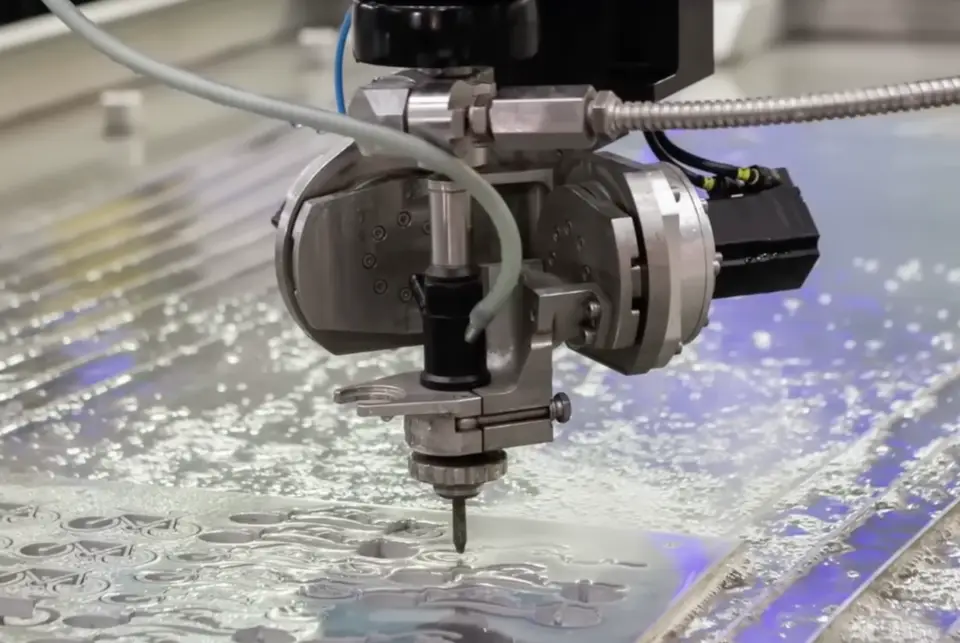
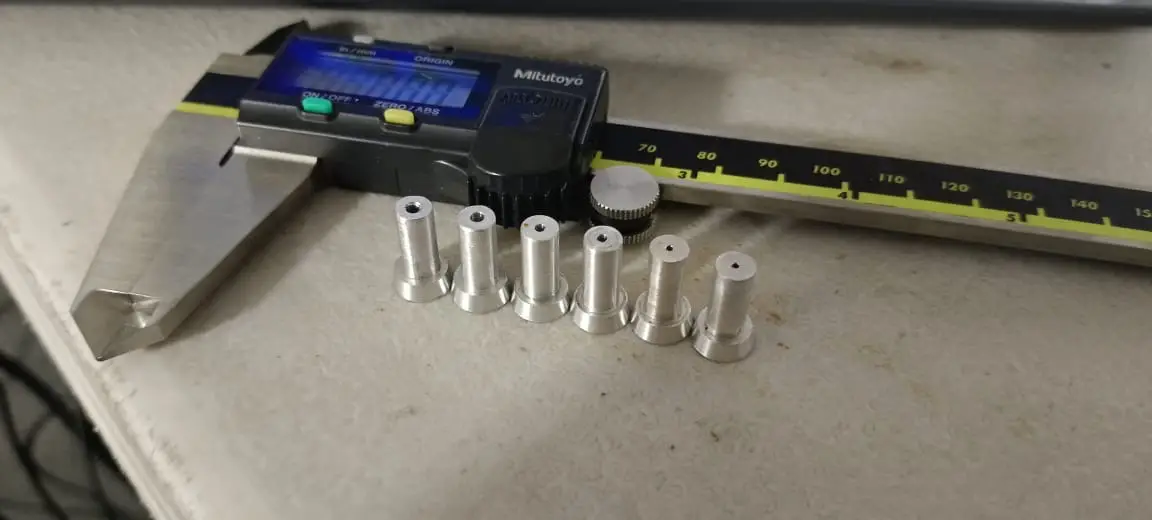
The right process depends on part geometry, tolerances, and production volume.
What are the key properties of UHMW?
Representative values for virgin UHMW. Filled and reprocessed grades differ, so check the supplier data sheet for a critical part.
| Property | Typical value |
|---|---|
| Density | ~0.93 g/cm³ (0.034 lb/in³), floats in water |
| Tensile strength | ~3 to 6 ksi (20 to 40 MPa) |
| Max continuous service temp | ~80 °C (180 °F) |
| Low-temperature toughness | Stays tough well below freezing |
| Coefficient of friction | Very low, roughly 0.1 to 0.2 dynamic |
| Abrasion resistance | Among the highest of any thermoplastic |
| Moisture absorption | Negligible |
| Thermal expansion | High, roughly ten times steel |
Thermal expansion is the property that most often catches UHMW designs out. A long wear strip grows and shrinks noticeably with temperature, so slotted mounting holes and expansion gaps matter more than a tight length tolerance.
UHMW parts in 3 steps

Upload your part
A CAD file or a sketch. Free quote in about 24 hours.

We match + manufacture
The best-fit shop from our network makes it, on your timeline.

Receive + review
Inspected, shipped and tracked in your inbox.
What stock forms does UHMW come in?
Sheet & plate
Natural white, black, and colored UHMW for routed wear strips, liners, and machined guides. Rod is also common for turned bushings and rollers.
What finishes work on UHMW?
UHMW ships as-machined. Its waxy, low-energy surface does not take paint, plating, or most adhesives without special treatment, so finishing choices are about the cut edge and color.
As-machined
The standard. UHMW machines to a smooth, slick surface that is ready to run against product or chain.
Deburred and broken edges
UHMW leaves soft, stringy burrs. Ask for edges broken where product or hands touch the part.
Color by grade
Natural white, black, green, and other pigmented stock are common. Color comes from the material, not a coating.
If a UHMW part has to be bonded, plan for mechanical fastening or a surface-treated bond rather than ordinary glue.
Where are UHMW parts used?
UHMW shows up wherever something slides, wears, or takes impact, especially in conveying and bulk handling.
- Wear strips
- Chain & belt guides
- Chute & hopper liners
- Star wheels
- Bushings
- Marine fender pads
- Dock bumpers
- Food processing parts
- All industries
How does UHMW compare to other materials?
How UHMW compares with the other plastics shops quote for wear and sliding parts.
UHMW vs HDPE
HDPE- UHMW has far better abrasion and impact resistance and lower friction
- HDPE is cheaper, stiffer, and easier to weld and thermoform
- Both are polyethylene and machine and route the same way
Choose UHMW for sliding and abrasive wear. Choose HDPE for boards, tanks, and general parts where wear life is not the driver.
UHMW vs Nylon
Nylon- UHMW has lower friction and better abrasion resistance
- Nylon is stiffer and stronger and holds tighter tolerances
- UHMW absorbs almost no moisture; nylon swells as it absorbs water
Choose UHMW for sliding and abrasive wear at low cost. Choose nylon when the part has to carry more load or hold tighter dimensions.
UHMW vs Delrin (acetal)
Delrin (acetal)- Delrin is far stiffer and machines to much tighter, more repeatable tolerances
- UHMW resists abrasion and impact better and costs less
- UHMW moves more with temperature
Choose Delrin for precise gears, bushings, and mechanisms. Choose UHMW for liners, guides, and wear surfaces where tolerance matters less than wear life.
Get UHMW part quotes
Upload your drawing and we'll source quotes from shops that machine, route, and waterjet cut UHMW wear parts.
- Free quote in about 24 hours
- No minimum order
- No account needed to start
STEP · STL · IGES · DWG · DXF · SLDPRT · and more
No CAD file? Describe your project instead
Frequently asked questions
What does UHMW stand for?
Ultra-high-molecular-weight polyethylene, often written UHMW-PE or UHMWPE. It is the same polymer family as HDPE, but with much longer molecular chains, which is where its toughness, low friction, and abrasion resistance come from.
Why is UHMW machined instead of molded?
Its melt is far too viscous for ordinary injection molding. UHMW is made into sheet and rod by compression molding or ram extrusion, and custom parts are then machined, routed, or waterjet cut from that stock.
What tolerances can UHMW hold?
Looser than most engineering plastics. UHMW is soft, moves with temperature, and can relax after machining, so many shops quote around +/- 0.005 to 0.010 in on small features and more on long parts. If a dimension is critical, call it out and expect the shop to discuss it.
Can you laser cut UHMW?
It is usually the wrong process. A laser melts UHMW and leaves a rough, beaded edge. CNC routing and waterjet cutting give a clean edge and are the normal ways to cut UHMW sheet.
Is UHMW food safe?
Virgin UHMW made from FDA-compliant resin is widely used for food contact parts. Reprocessed grades usually are not. If your part touches food, say so and ask for the material certification with the quote.
How is UHMW different from HDPE?
Both are polyethylene. UHMW has much longer molecular chains, so it wears and takes impact far better and has lower friction. HDPE is cheaper, stiffer, and easier to weld and thermoform. For sliding and wear parts, UHMW is the usual choice.
What file formats should I send for a UHMW part?
STEP, IGES, DWG, DXF, or a dimensioned PDF. Include the grade (virgin, reprocessed, UV-stabilized, or filled), thickness, critical dimensions, quantity, and whether the part touches food. A DXF is enough for routed or waterjet cut sheet parts.
Last reviewed by Tom Petrini