HDPE machining and cutting for custom parts
HDPE is the low-cost, chemical-resistant plastic behind cutting boards, marine board, tank fittings, and liners. It routes and machines easily, but it moves with heat and does not laser cut cleanly, so most custom HDPE parts are routed, milled, or waterjet cut from sheet and rod. Upload your drawing and we'll send you one matched quote from a partner shop that cuts it.
STEP · STL · IGES · DWG · DXF · SLDPRT · and more
No CAD file? Describe your project instead
What is HDPE?
HDPE (high density polyethylene) is a tough, low-cost thermoplastic with a density around 0.94 to 0.97 g/cm³. It resists most acids, bases, and solvents, absorbs almost no water, and is available in FDA-compliant grades for food contact. Sheet and rod are routed, machined, and waterjet cut into cutting boards, marine parts, tank components, and liners.
Last reviewed
Why work with OpenSpindle
No-obligation quote
Send a part and get a real price. Nothing to commit to, no cost to ask.
A person to talk to
One lead from quote to delivery who has sourced it before.
Your files stay private
NDA on request. Files shared only with matched shops.
Where HDPE parts go wrong
HDPE is easy to cut and easy to get wrong. These are the issues that separate a shop that cuts it regularly from one that does not.
Failure mode 01
Laser cutting melts the edge
A CO2 laser melts HDPE rather than vaporizing it cleanly, leaving a beaded, uneven edge and a lot of smoke. Many shops will not laser HDPE at all. Routing and waterjet are the normal ways to cut it, and they hold a cleaner, square edge.
Failure mode 02
Heat moves the part
HDPE softens and grows with frictional heat. Sharp tools, high chip loads, and air or mist cooling keep the cut cool. A part measured warm off the machine can read differently an hour later.
Failure mode 03
Stress relief and warp
Extruded sheet carries internal stress. Pocketing one face or cutting a thin, long part can let it bow. Shops balance material removal on both faces, or rough, rest, and finish on parts that must stay flat.
Failure mode 04
Burrs and fuzz
HDPE leaves soft, stringy burrs that a sharp tool and the right feed minimize. Call out broken edges where hands or product touch the part.
Which HDPE grade should I use?
Most custom parts run natural or colored general-purpose sheet. The other grades add UV life, food-contact listings, layered color, or better wear. If yours is not here, ask when you request a quote.
Natural (general purpose)
Translucent milky-white HDPE sheet and rod. The lowest-cost grade, with the full chemical resistance of the material. Many natural sheets are made from FDA-compliant resin, but confirm it on the cert if the part touches food.
Best for Tank parts, fixtures, liners, general machined parts
Cutting board / food grade
White or colored HDPE made to FDA-compliant resin and often NSF/ANSI 51 listed. Colors are used for HACCP color coding in food plants (raw meat, poultry, produce, and so on).
Best for Cutting boards, food processing guides, conveyor parts
Marine board (UV-stabilized)
Pigmented HDPE with UV stabilizers so it does not chalk and embrittle in sunlight, usually with a textured face. Sold under brand names such as StarBoard and Seaboard. Machines like standard HDPE.
Best for Boat hatches, helm panels, rod holders, outdoor furniture
Colored and two-color layered
Solid colors and layered sheets with a contrasting core, so routing or engraving through the top layer exposes the second color. Common for signs and playground panels.
Best for Signage, playground panels, engraved labels
HMW-PE
High-molecular-weight polyethylene sits between HDPE and UHMW. Better abrasion and impact resistance than HDPE at a lower price than UHMW. Specify it when HDPE wears too fast and UHMW is more than the part needs.
Best for Moderate wear strips, truck bed and chute liners
How HDPE parts are made
The right process depends on part geometry, tolerances, and production volume.
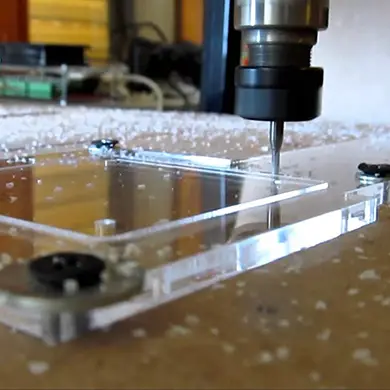 CNC RoutingThe usual process for HDPE sheet: boards, panels, liners, and profiles nested from full sheets.
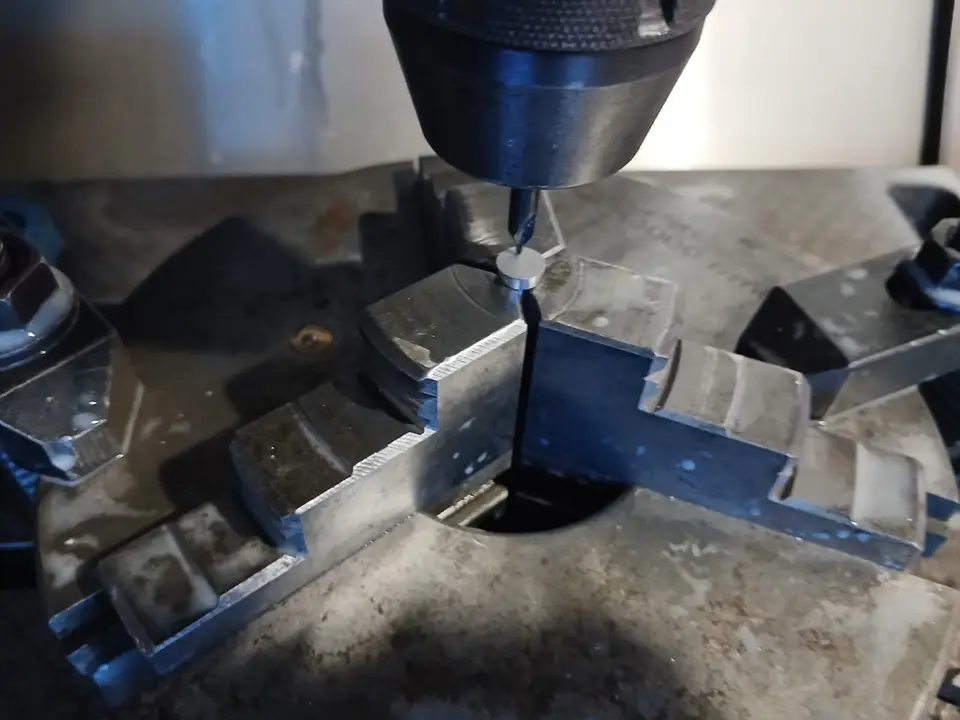 CNC MachiningMilled blocks, manifolds, fixtures, and pocketed parts from HDPE plate.
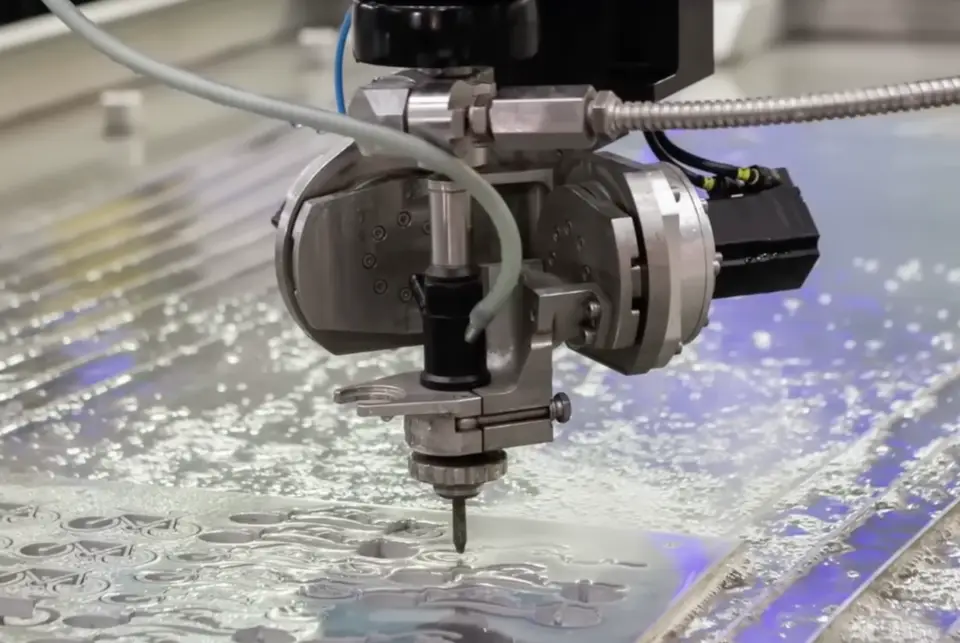 Waterjet CuttingCold cutting for thick HDPE plate with no melted edge.
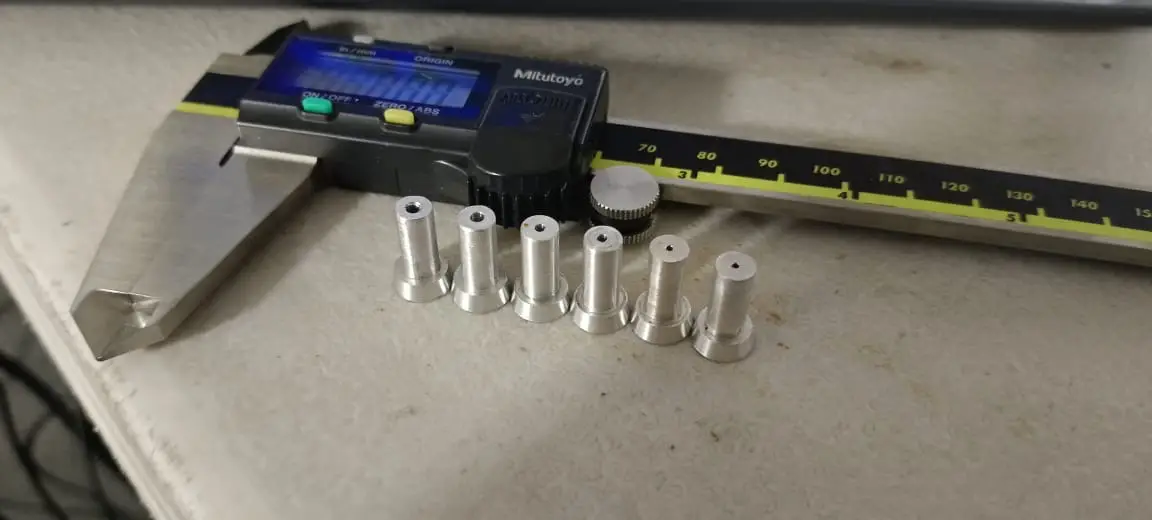 CNC TurningBushings, rollers, plugs, and fittings from HDPE rod.
What are the key properties of HDPE?
Typical values for unfilled sheet-grade HDPE. Grades and suppliers vary, so check the data sheet for a critical part.
| Property | Typical value |
|---|---|
| Density | ~0.94 to 0.97 g/cm³ (0.034 to 0.035 lb/in³), floats in water |
| Tensile strength (yield) | ~3.2 to 4.5 ksi (22 to 31 MPa) |
| Max continuous service temp | ~80 °C (180 °F) |
| Melting point | ~125 to 135 °C (257 to 275 °F) |
| Hardness | Shore D ~60 to 70 |
| Moisture absorption | Below 0.01% (24 h) |
| Chemical resistance | Excellent against most acids, bases, and alcohols; attacked by strong oxidizers |
| Thermal expansion | High, roughly 100 to 200 µm/m·°C, about 10 times steel |
Thermal expansion drives HDPE design more than strength does. A 48 in (1.2 m) panel can change length by roughly 1/4 to 1/2 in (6 to 12 mm) across a 50 °C (90 °F) swing, so long parts need slotted holes and expansion gaps, and a tight length tolerance only means something at a stated temperature.
HDPE parts in 3 steps

Upload your part
A CAD file or a sketch. Free quote in about 24 hours.
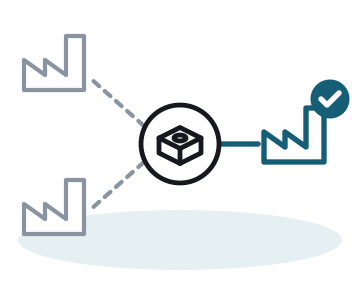
We match + manufacture
The best-fit shop from our network makes it, on your timeline.

Receive + review
Inspected, shipped and tracked in your inbox.
What stock forms does HDPE come in?
Sheet & plate
Natural, colored, marine, and cutting board sheet from about 1/16 in to several inches thick. Rod is also common for turned bushings, rollers, and plugs.
What finishes work on HDPE?
HDPE ships as-machined. Its waxy, low-energy surface does not take paint or ordinary adhesives without surface treatment, so finishing choices are about the edge, texture, and color.
As-machined
The standard. Routed and milled HDPE has a smooth, slightly satin surface with light tool marks.
Deburred and broken edges
Ask for edges broken or rounded over where people or product touch the part. Cutting boards are usually rounded over on the router.
Textured face
Marine board and some cutting board sheets come with an embossed texture on one or both faces. It comes from the sheet, not a secondary operation.
Engraving
Two-color layered HDPE is routed or engraved through the top layer to show the core color for signs and labels.
HDPE is hard to glue. Plan for mechanical fasteners, or plastic welding (hot-gas or extrusion welding) for tanks and fabricated assemblies.
Where are HDPE parts used?
HDPE shows up wherever a part needs chemical resistance, food contact, or outdoor durability at low cost.
- Cutting boards
- Food processing parts
- Boat hatches & helm panels
- Chemical tank fittings & baffles
- Wear strips & liners
- Bushings & rollers
- Playground & outdoor panels
- Signage
- All industries
HDPE vs UHMW and other plastics
HDPE and UHMW are both polyethylene and get confused often. This is how HDPE compares with the plastics shops most often quote instead.
HDPE vs UHMW
UHMW- UHMW has far better abrasion and impact resistance and lower friction
- HDPE is cheaper, a little stiffer, and easier to weld and thermoform
- Both machine the same way and both move with heat; neither laser cuts cleanly
- Both come in FDA-compliant grades for food contact
Choose UHMW for wear strips, chain guides, and parts that slide or take impact. Choose HDPE for cutting boards, tank parts, marine panels, and anything where wear is not the main load and cost matters.
HDPE vs Polycarbonate
Polycarbonate- Polycarbonate is clear, much stronger, and holds tolerance far better
- HDPE resists more chemicals and costs much less
- HDPE absorbs almost no water; polycarbonate absorbs a little
Choose polycarbonate for clear guards, windows, and structural parts. Choose HDPE for opaque chemical, food, and outdoor parts on a budget.
HDPE vs Delrin (acetal)
Delrin (acetal)- Delrin is much stiffer and machines to tight, repeatable tolerances
- HDPE costs less and has broader chemical resistance
- HDPE moves more with temperature
Choose Delrin for precise mechanisms, gears, and fittings. Choose HDPE for panels, liners, and boards where tolerance is loose.
Get an HDPE part quote
Upload your drawing and we'll send you one matched quote from a partner shop that routes, machines, and waterjet cuts HDPE.
- Free quote in about 24 hours
- No minimum order
- No account needed to start
STEP · STL · IGES · DWG · DXF · SLDPRT · and more
No CAD file? Describe your project instead
Frequently asked questions
What does HDPE stand for?
High density polyethylene. It is the same polymer family as LDPE (low density) and UHMW (ultra-high-molecular-weight), with fewer side branches on the molecular chain than LDPE, which makes it denser, stiffer, and stronger.
Can you laser cut HDPE?
Usually not well. A CO2 laser melts HDPE and leaves a beaded, uneven edge with heavy smoke, so many shops decline it. CNC routing and waterjet cutting give a clean, square edge and are the normal ways to cut HDPE sheet.
Is HDPE food safe?
HDPE made from resin that complies with FDA 21 CFR 177.1520 is widely used for food contact, and cutting board sheet is often also NSF/ANSI 51 listed. Compliance depends on the specific stock and any colorants, so say the part touches food and ask for the material certification with the quote.
What tolerances can HDPE hold?
Looser than stiffer engineering plastics. Many shops quote around +/- 0.005 to 0.010 in on small machined features, and more on long routed parts, because HDPE moves with heat and can relax after cutting. If a dimension is critical, call it out and state the temperature it applies at.
What is the difference between HDPE and UHMW?
Both are polyethylene. UHMW has much longer molecular chains, so it wears and takes impact far better and has lower friction. HDPE is cheaper and easier to weld and thermoform. Choose UHMW for sliding and wear parts and HDPE for boards, panels, and tank parts.
Can HDPE be glued or painted?
Not reliably without surface treatment. HDPE has a low-energy, waxy surface that ordinary adhesives and paints do not grip. Mechanical fasteners, plastic welding, or flame or plasma treatment before bonding are the usual answers.
What file formats should I send for an HDPE part?
STEP, IGES, DWG, DXF, or a dimensioned PDF. Include the grade (natural, colored, marine board, food grade), thickness, quantity, critical dimensions, and whether the part touches food or lives outdoors. A DXF is enough for routed or waterjet cut sheet parts.
Charts for HDPE drawings
Other materials
Sources
- MatWeb, overview of materials for high density polyethylene (HDPE)
- ASTM D4976, Standard Specification for Polyethylene Plastics Molding and Extrusion Materials
- FDA 21 CFR 177.1520, Olefin polymers
- NSF/ANSI 51, Food Equipment Materials
Last reviewed by Tom Petrini