Process & DFM
Carbon Fiber and Composite DFM: Designing for a Laminate
The short answer
Carbon fiber plate, G10 and similar laminates are stacks of fiber layers bonded in resin, and they fail differently from metal. They are strong along the fibers and weak between the layers, so the dominant design concerns are delamination at edges and holes, thickness that varies more than a metal sheet, and abrasive wear that destroys tooling. Design with generous radii, no sharp internal corners, holes no closer to an edge than about three diameters, and bearing loads carried by inserts or spread washers rather than by a fastener head clamping directly on the laminate.
What a laminate is, physically
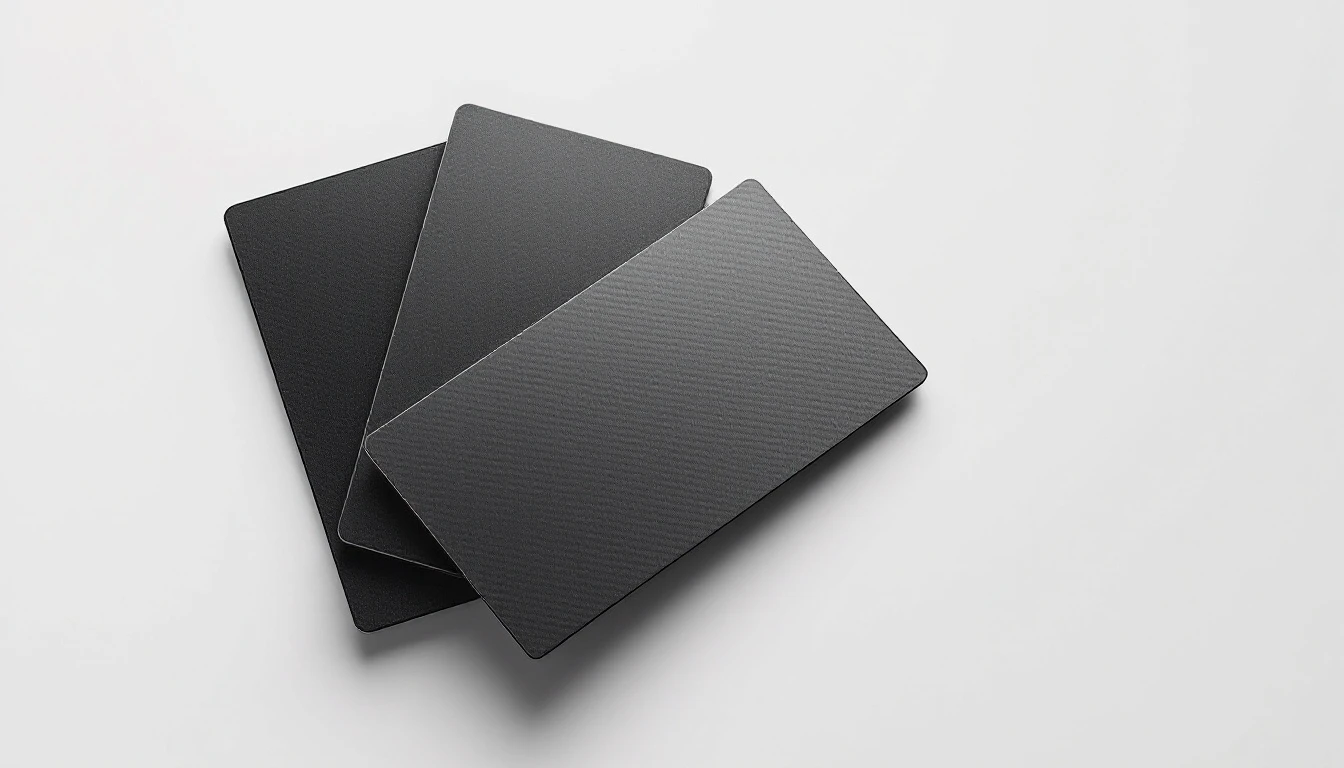
A sheet of carbon fiber plate is not a homogeneous material. It is a stack of woven or unidirectional fiber layers, each a fraction of a millimeter thick, bonded together in a cured resin matrix. G10 and FR4 are the same idea with glass fiber and epoxy.
Two consequences drive everything else.
The material is directional. Strength along the fibers is extraordinary. Strength between the layers, in the direction perpendicular to the sheet, is the strength of the resin alone, which is modest. Composite parts rarely fail by breaking a fiber. They fail by the layers separating, which is delamination.
The fiber is abrasive and the resin is not. A cutter moving through a laminate is being sanded by the reinforcement while the resin around it heats and softens. That combination is why tooling life is short, why cut quality depends so much on feeds and speeds, and why a shop that machines aluminum all day may not want your composite job.
Designing well for composites is mostly a matter of respecting those two facts.
Edges and corners: where delamination starts
Every cut exposes the layer boundaries. A poorly cut edge shows fraying, fiber pullout or a visible whitening where layers have started to separate, and damage that starts at an edge propagates under load.
No sharp internal corners. A sharp internal corner concentrates stress exactly where the laminate is weakest and gives the cutter a place to dwell and overheat. Use the most generous radius the design tolerates, and never less than the cutter radius the shop can run, which on a router is larger than you may expect (see CNC routing DFM).
Keep cutouts away from edges. A slot near the edge of a panel leaves a narrow strip of laminate whose fibers have been cut on both sides, which is structurally much weaker than the panel suggests.
Expect the edge to need sealing. A machined composite edge exposes raw fiber ends. For appearance, for moisture resistance, and for handling safety, edges are often sealed with resin or trimmed with an edge treatment. Decide whether your part needs that, because it is a real operation with a real cost.
Specify the visible face. Woven carbon has a cosmetic surface, and the face that sits against the bed of the machine gets marked. Which face is showing in the final product is a requirement to state, not to assume.
Holes and fasteners, the most common failure
Drilling a laminate cuts fibers on the way in and pushes layers apart on the way out. The exit side is where delamination shows.
Hole spacing. Keep the distance from hole center to a free edge at about three hole diameters or more, and the same between adjacent holes. Closer than that and the remaining laminate between the hole and the edge is doing very little.
Do not clamp directly on the laminate. A fastener torqued against a composite surface crushes the resin locally. Use a washer that spreads the load over a larger area, or better, a compression bushing or insert that carries the clamp load through the thickness rather than into the surface.
Threads in laminate do not hold. Cut threads sever fibers and rely on resin shear. For anything that will be assembled and disassembled, use an insert.
Consider bonding instead of bolting. A bonded joint spreads load across an area rather than concentrating it at a hole, which suits the material far better. It also removes the hole, which is where most composite failures begin. The trade is surface preparation and cure time, and a joint that cannot be taken apart. Joint selection across all materials is covered in design for assembly.
Watch galvanic corrosion. Carbon fiber is electrically conductive and sits far from aluminum on the galvanic scale. An aluminum fastener through a carbon panel in a wet environment corrodes. Use stainless or titanium hardware, or isolate the two with a non-conductive bushing or washer.
Tolerances are not metal tolerances
Two sources of variation land on every composite part, and neither one is the machine's fault.
Thickness varies. A laminate is built up from plies and cured under pressure, and the result varies across the sheet and between sheets more than rolled metal does. A nominal 3 mm plate is nominal. If your design has a slot that another panel fits into, design the joint around the measured thickness or leave adjustment in the assembly.
Cut features hold better than overall dimensions. Hole positions and profile dimensions cut in one operation hold well. Thickness-dependent features and flatness across a large panel carry the material's variation with them.
Design response: put your tight tolerances on the features that mate, and use slots or oversized clearance holes elsewhere. Composite assemblies that rely on every dimension being exact tend to be fought into place, and fighting a laminate into place is how you start a delamination. If several composite parts stack up in an assembly, work the tolerance stack-up before committing to the joints.
What this does to the quote
Composite parts are quoted with cost drivers that do not appear in a metal quote, and knowing them makes the number legible.
| Cost driver | Why it appears | What reduces it |
|---|---|---|
| Material | Laminate plate is expensive and sold by the sheet. It often dominates the part price. | Nest efficiently, design to standard sheet sizes, reconsider thickness |
| Tooling wear | Fiber is abrasive. Cutters are consumed rather than worn. | Fewer cut features, generous radii, and quantity to spread the tooling across parts |
| Dust handling | Composite dust is a respiratory and electrical hazard requiring extraction and cleanup. | Nothing in the design. It is a fixed characteristic of the job and of the shop. |
| Edge finishing | Machined edges expose raw fiber and may need sealing or trimming. | Decide honestly which edges are visible or handled, and only finish those |
| Fixturing | Thin panels need support to avoid vibration that damages the laminate. | Larger parts, fewer tiny parts, simpler outlines |
| Inspection | Delamination is not always visible, so critical parts may need tap testing or ultrasonic inspection. | Reserve it for structural parts that need it |
The pattern that surprises people coming from aluminum: material is usually the biggest line, not machine time. Redesigning to save machining minutes on a composite part often saves less than nesting two more parts out of the same sheet.
Choosing the process, and choosing the material at all
Routing, waterjet or laser. CNC routing is the general answer for plate, with the tooling cost above. Abrasive waterjet cuts without heat and without dulling a cutter, which suits thick laminate well, though it introduces water and a coarser edge. Laser is generally a poor fit for carbon fiber: the resin burns before the fiber cuts, leaving a heat affected, charred edge. The carbon fiber cutting guide compares the methods against thickness and edge quality.
Ask whether it needs to be composite. Carbon fiber plate is specified for stiffness-to-weight, for thermal stability, or for appearance. If the real requirement is stiffness in a part where weight is not critical, aluminum is cheaper, easier to machine, easier to join and easier to inspect. The honest question is whether the weight saving is worth the cost and the joint complexity, and for a bracket that is not on a moving assembly, it often is not.
Where composite genuinely wins. Moving masses where inertia is the constraint, such as a robotic arm or a drone frame. Long unsupported spans where deflection matters. Parts where thermal expansion must be near zero. Anything airborne, where weight compounds through the whole design.
Send the right information. A flat DXF for the profile, a statement of the plate specification you intend, the visible face, which edges need sealing, and the fastener strategy. On composite parts more than any other material, the fastener strategy is a design decision rather than an assembly detail.